
Last updated November 18, 2026








Free written scope consultation - allowances, timeline, and change-order rules on paper before a single trade is scheduled
General Contractor Maintenance Schedule: What to Do and When
Here’s a number that surprises most homeowners: in California, the average remodel warranty claim gets filed in month 14. That’s just after the standard one-year contractor warranty runs out, for problems a routine six-month check would have caught while the fix was still free. A finished kitchen or bathroom isn’t maintenance-free. It’s a set of moving parts – caulk, grout, expansion gaps, door hardware – that each have a service interval. This guide turns your completed project into a five-year maintenance calendar, with Anaheim-specific notes on the Santa Ana winds and what to check before October.
Quick Answer
After a remodel, run a full walkthrough at 30 days, then inspect caulk joints, grout lines, door alignment, and mechanical connections every six months, and do a deeper room-by-room check once a year. Interior caulk and grout generally need refreshing every two to three years; exterior caulk and painted trim in Anaheim usually need attention every 12 to 18 months because of sun and the fall wind season. Skipping these intervals can void manufacturer warranties on tile, decking, and painted surfaces.
Styles & brands we work with
- Kitchen remodeling
- Bathroom remodeling
- Home additions & ADU
- Roofing
- Windows & doors
- Driveway & pavers
- Fence
Table of Contents
- The 30-Day Walkthrough: Your Punch-List Window
- Materials With Manufacturer-Mandated Maintenance
- Anaheim Maintenance: The Santa Ana Winds and What to Do Before October
- Settlement Movement vs. Structural Defect
- Room-by-Room Annual Inspection Checklist
- Your Five-Year Maintenance Calendar
- Common Mistakes to Avoid
- When to Call a Professional
The 30-Day Walkthrough: Your Punch-List Window
The first month after completion is when your contractor’s punch-list window is still open, and it’s when small issues are easiest to fix at no cost. In our experience, the problems that turn into warranty claims later almost always show a sign in that first 30 days. Schedule an hour, go room by room, and bring a notepad.
What to look for in the first 30 days:
- Caulk joints: Check the seams where backsplash meets counter, where the tub meets tile, and around window frames. Look for gaps opening up, cracking, or caulk pulling away from one surface. A joint that opens in month one is telling you something flexed.
- Grout lines: Run your hand over floor and shower grout. Look for hairline cracks, especially at inside corners and where tile meets a different material. Cracking in the field (away from corners) is worth flagging.
- Door alignment: Open and close every cabinet, interior, and pocket door. Do they stick, rub, or need a push to latch? Doors that were perfect on day one and drag on day 30 point to settling or humidity changes.
- Mechanical connections: Run every faucet, check under sinks for weeping, flush every toilet, and test that shutoff valves turn easily. Look under the dishwasher and ice maker for moisture.
- Paint and trim: Look for nail pops, cracking at seams where trim meets wall, and any bubbling on painted surfaces.
When we complete a project in Anaheim, we leave the homeowner with a written punch-list window and a written price for the work – so there’s no ambiguity when you report an item. If you’re planning a remodel and want that standard up front, our general contractor page for Anaheim explains how the written price and guarantee work.
Materials With Manufacturer-Mandated Maintenance
Most homeowners don’t realize that some of the materials in their remodel carry maintenance requirements in the manufacturer’s warranty. Skip the required care, and the warranty can be voided – meaning if the product fails, you’re on your own. This is one of the most common and most avoidable mistakes we see.
- Tile grout: Cementitious grout needs to be sealed periodically per the manufacturer’s instructions, usually every one to three years depending on traffic and whether it’s in a wet area. Unsealed grout in a shower can absorb moisture and lead to efflorescence (the white powdery look) and eventually loose tile. Some newer grouts are marketed as no-seal; check your specific product’s documentation before assuming.
- Composite decking: Brands like Techo-Bloc and similar hardscape and decking products require periodic cleaning with manufacturer-approved cleaners. Power-washing at the wrong pressure can void the finish warranty. Follow the care sheet, not the internet.
- Painted exterior surfaces: James Hardie siding carries a finish warranty, but it depends on proper cleaning and, eventually, repainting with an approved product. Skipping that step is one of the fastest ways to shorten a siding warranty.
- Quartz and stone countertops: Cambria, Silestone, and Caesarstone surfaces are low-maintenance but still specify approved cleaners. Abrasive cleaners can dull the finish and, in some cases, affect the warranty.
- Metal fixtures: Kohler, Moen, and similar finishes have care instructions. Harsh chemical cleaners can pit the finish.
Keep every product care sheet your contractor hands you. If your contractor doesn’t hand you any, ask for them. We keep the care documentation for every material we install, including the countertop and cabinet lines, so homeowners know exactly what each product requires.
Anaheim Maintenance: The Santa Ana Winds and What to Do Before October
Anaheim has a maintenance profile that differs from most of the country. The dry season and the Santa Ana wind events – typically September through November – put real stress on exterior caulk, trim, and roofing connections. Winds can hit hard, the air dries out, and any small gap in exterior sealing becomes an entry point for water and dust. What looks fine in July can fail by December.
Before October each year, do these checks:
- Walk the exterior caulk lines around windows, doors, and where siding meets trim. Look for cracks, gaps, or caulk that has pulled away. Winds flex these joints; dry heat shrinks the caulk.
- Check painted trim and fascia for cracking, peeling, or exposed wood. A small paint failure becomes a water intrusion problem once the first winter rain hits.
- Inspect roof flashing and penetrations visually from the ground with binoculars – don’t get on the roof. Look for lifted shingles, missing sealant at vents, or debris piled where the roof meets a wall.
- Clear gutters and downspouts so the first rain drains where it should.
- Check windows and doors for air leaks – run a hand along the frame on a windy day, or use a tissue to check for drafts. Weatherstripping wears out and is inexpensive to replace.
Anaheim’s climate is mild, but the sun is strong and the wind season is real. Homeowners in neighborhoods like Anaheim Hills, where properties sit at higher elevation and get more wind exposure, should do this check every year without fail. Homeowners closer to the flatlands can often get away with every 18 months, but the October check is cheap insurance.
Settlement Movement vs. Structural Defect
Every home moves. Southern California homes sit on soil that expands and contracts with moisture, and new construction or remodeling introduces new loads and new materials that all find their own equilibrium in the first year or two. The question is how to tell normal settlement from a problem that needs a contractor’s attention – and the answer comes down to pattern and progression.
Normal settlement signs to expect:
- Hairline cracks at inside corners where two different materials meet (drywall to trim, tile to drywall). These are expansion and contraction, not structural failure.
- Small nail pops in drywall – the fastener head pushes through the paint as framing dries and shrinks.
- Doors that stick slightly in one season and free up in another, especially during the transition from wet to dry.
- Minor cracks in grout at inside corners, which is why we use flexible sealant at those joints rather than rigid grout.
Signs that warrant a call:
- Cracks that grow month over month. Take a photo with a ruler next to it, date it, and check again in 30 days.
- Diagonal cracks at the corners of door or window openings, especially if they widen.
- Doors or windows that no longer close or latch at all, in any season.
- Any crack wider than a credit card thickness, or any crack where one side of the crack sits higher than the other.
- Bubbling or separation where the wall meets the ceiling or floor.
When in doubt, document. A dated photo series is the single most useful thing you can give a contractor or engineer. If you’ve had a remodel in the last year and something looks off, call us and we’ll walk you through what we’re seeing – our bathroom remodeling team in Anaheim handles this kind of follow-up regularly.
Room-by-Room Annual Inspection Checklist
Set aside one hour a year – pick a date and put it on the calendar – and run through this list. Each item has a specific indicator that tells you whether to handle it yourself or call a professional.
Kitchen
- Under-sink cabinet: Look and feel for moisture, softness, or discoloration. Any soft wood = call a pro.
- Backsplash and counter seams: Caulk intact? If a gap is opening, recaulk now before water gets behind it.
- Cabinet doors and drawers: Hinges loose? Adjust or tighten yourself. Doors that won’t align even after adjustment = call.
- Range hood: Is the filter clean? A clogged filter reduces venting and is a fire risk. Clean or replace per the manual.
- Dishwasher and ice maker lines: Look for drips or bulging supply lines. Water where it shouldn’t be = call.
Bathrooms
- Shower and tub surround: Grout and caulk intact? Recaulk small gaps yourself; call if grout is cracking in the field or tiles feel loose.
- Toilet base: Rock the bowl gently. Any movement means the wax ring may be failing – call.
- Exhaust fan: Hold a tissue to the grille. If it doesn’t hold, the fan isn’t moving air and needs service.
- Under vanity: Check for moisture and slow drips. Fix the easy ones; call for anything you can’t trace.
Living Areas and Bedrooms
- Windows and doors: Open and close every one. Note sticking or drafts.
- Ceilings and walls: Look for new cracks, water stains, or bubbling paint. Water stains = call.
- Floor transitions: Check where flooring changes material. Lifting or gapping = note it.
Exterior
- Caulk and paint: See the Anaheim section above. Recaulk small gaps yourself; call for larger failures or any water intrusion.
- Deck and hardscape: Look for loose pavers, settling, or popped joints. Loose pavers you can reseat; widespread movement = call.
- Drainage: Water should flow away from the house. Any pooling against the foundation = call.
Your Five-Year Maintenance Calendar
Here’s the schedule we recommend to homeowners after a remodel. It’s built around the intervals that protect both your materials and your warranty.
- Month 1 – 30-day walkthrough: Full room-by-room inspection inside your contractor’s punch-list window. Report anything you find in writing.
- Month 6 – first six-month check: Re-check the same items. Focus on caulk, grout, doors, and mechanical connections. Anything that moved in months one to six is worth a closer look.
- Month 12 – one-year full inspection: All room-by-room items plus exterior. This is the last month of most standard one-year warranties, so document everything and report in writing before it closes.
- Year 2 – refresh season: Recaulk interior wet areas (bathrooms, kitchen backsplash). Check grout and reseal if the manufacturer specifies. Before October, do the exterior caulk and paint check.
- Year 3 – deeper materials review: Reassess grout in high-traffic floors and wet areas. Check composite decking and hardscape for manufacturer care needs. Re-check exterior caulk.
- Years 4-5 – plan for the bigger items: Repainting exterior trim typically comes into play here in Anaheim’s sun. Budget for it. Continue the annual room-by-room check and the October exterior check every year.
Post this schedule on the inside of a kitchen cabinet door and set a recurring calendar reminder. Homeowners who follow it catch problems while they’re still small and cheap to fix.
Common Mistakes to Avoid
- Skipping the 30-day walkthrough. The punch-list window closes, and you lose the chance to have small issues fixed at no cost. In Anaheim, where dry heat can open caulk joints fast, month one matters.
- Assuming “no maintenance” means no care. Composite decking, quartz counters, and modern grouts still need approved cleaners and periodic care. Using the wrong cleaner can void the warranty.
- Throwing away the manufacturer care sheets. Without them, you don’t know the required intervals – and the warranty may hinge on following them.
- Recaulking over failing caulk. New caulk won’t stick to old, dirty caulk. Remove the old bead first, clean, then apply. A bad recaulk hides a bigger gap.
- Ignoring small cracks that keep growing. A hairline crack is normal. One that widens month over month is a signal. Photograph it with a date and track it.
- Power-washing hardscape or painted surfaces at full pressure. You can strip finishes and void warranties on products like Techo-Bloc pavers or James Hardie siding. Use the manufacturer’s recommended method.
- Waiting until the wind season to check exterior caulk. By October, the dry months have already done their work. Check in August so there’s time to fix before the winds arrive.
When to Call a Professional
Some items on this list you can handle yourself: recaulking a small kitchen seam, tightening a cabinet hinge, cleaning a range hood filter, replacing weatherstripping. Others need a trained eye. Call a professional if any of these are true: a crack is growing or wider than a credit card; there’s water where it shouldn’t be; a door or window no longer closes; a tile feels loose or a grout line is cracking in the field; a paver has settled significantly; or any exterior caulk or paint failure has exposed wood or substrate. Also call if it’s the last month of your warranty and you’re not sure whether something is normal – getting a professional opinion on the record before the warranty closes is worth the call.
Penhallow Remodeling Anaheim offers free estimates in Anaheim – call (844) 320-2908. We’ll look at what you’re seeing and tell you honestly whether it needs our attention or whether you can handle it yourself.
See the difference
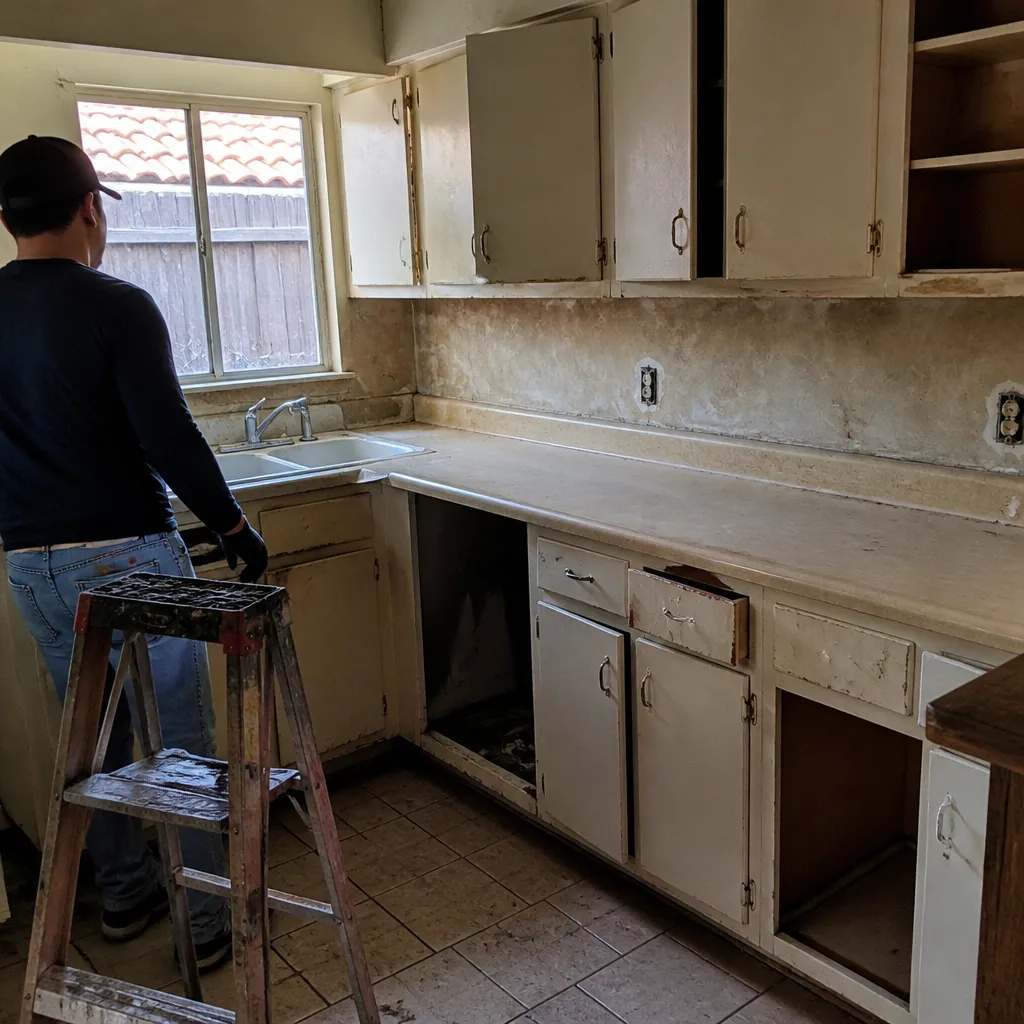 Before
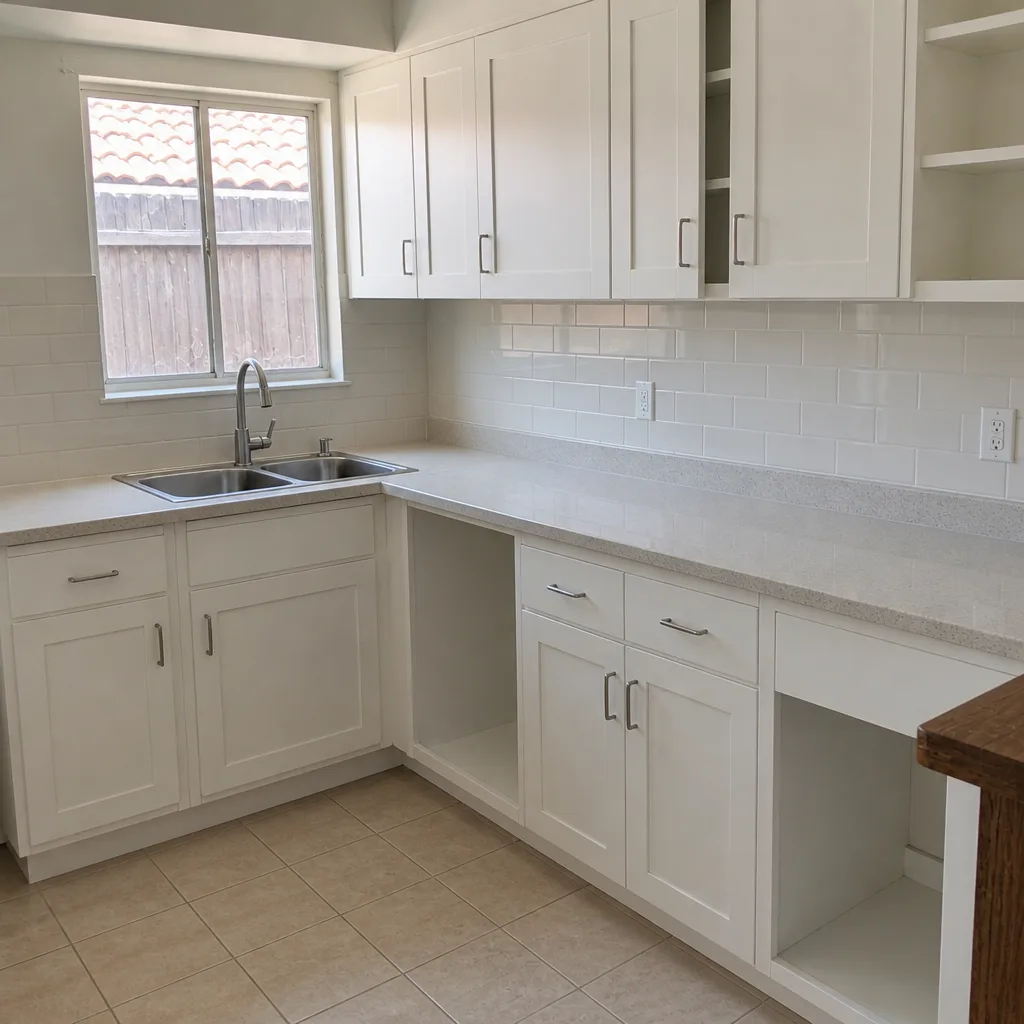 After
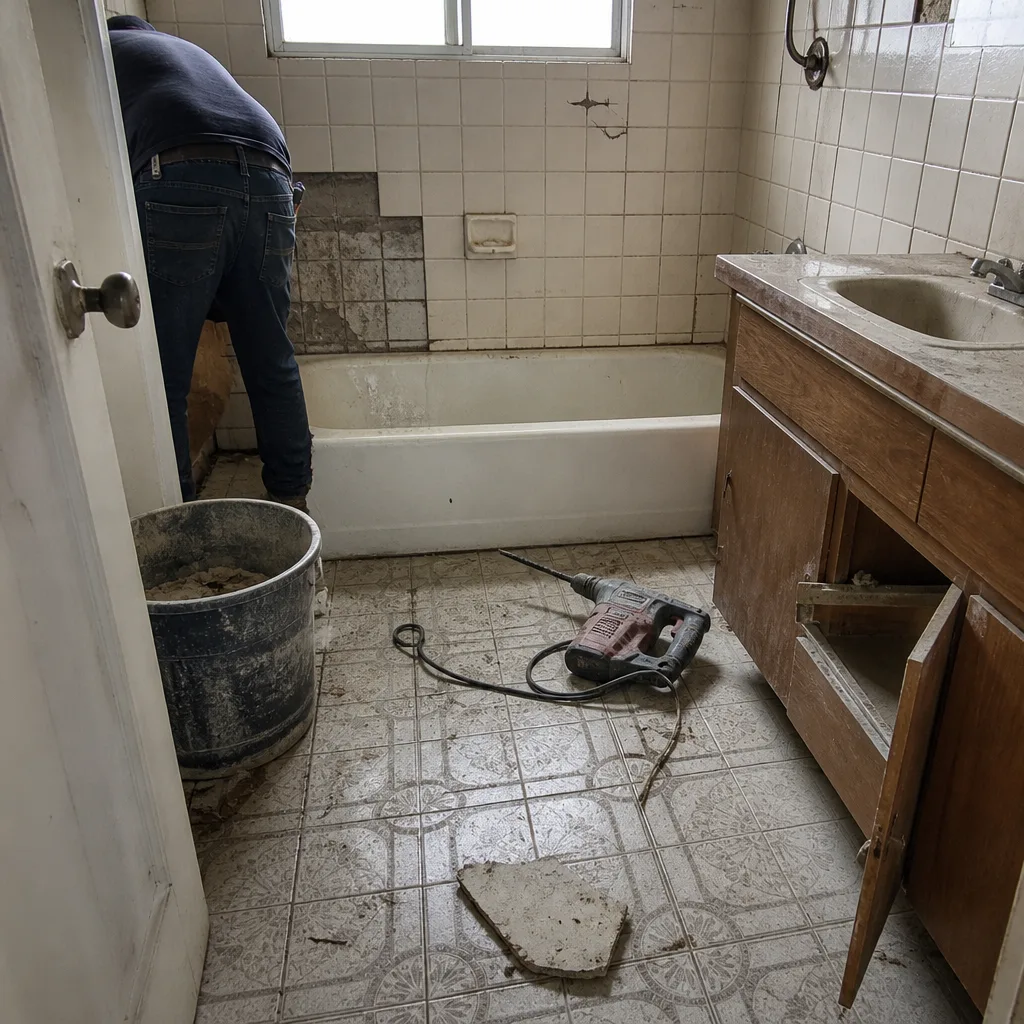 Before
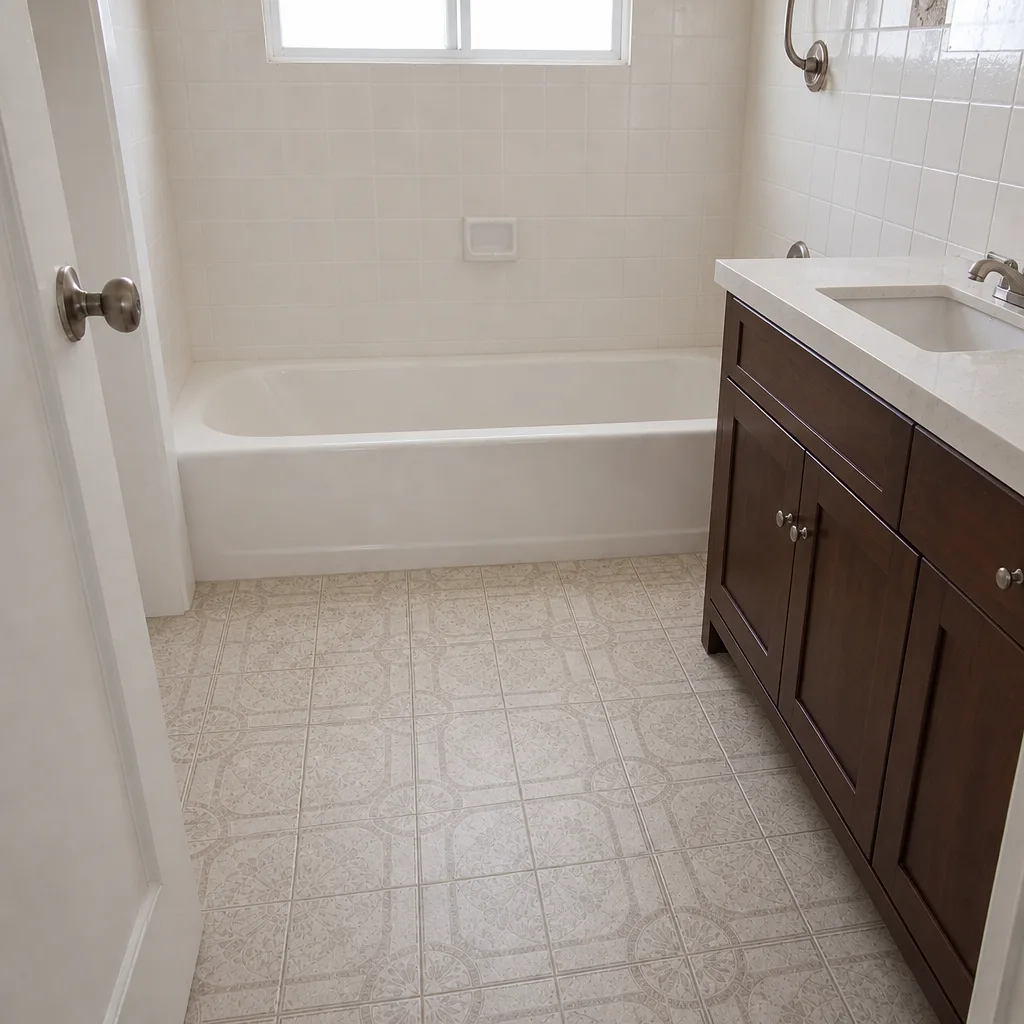 After
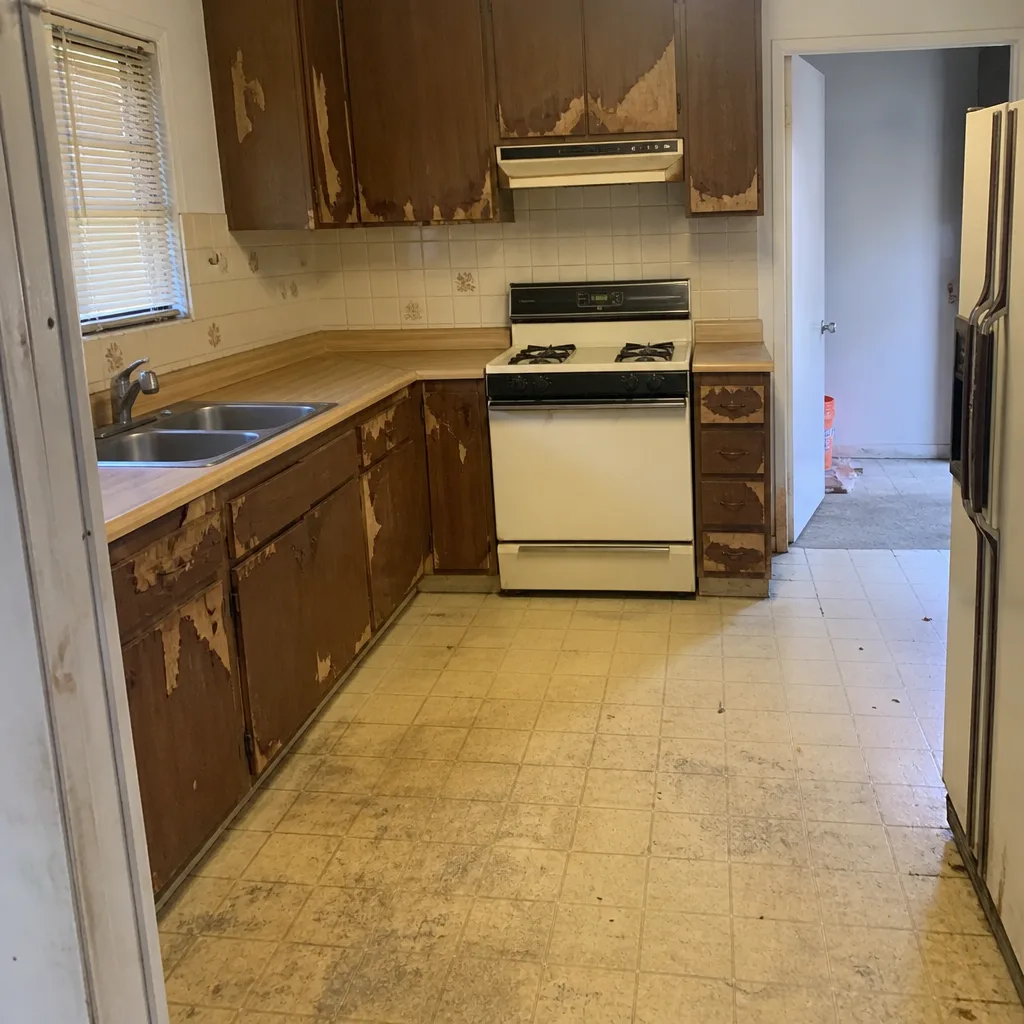 Before
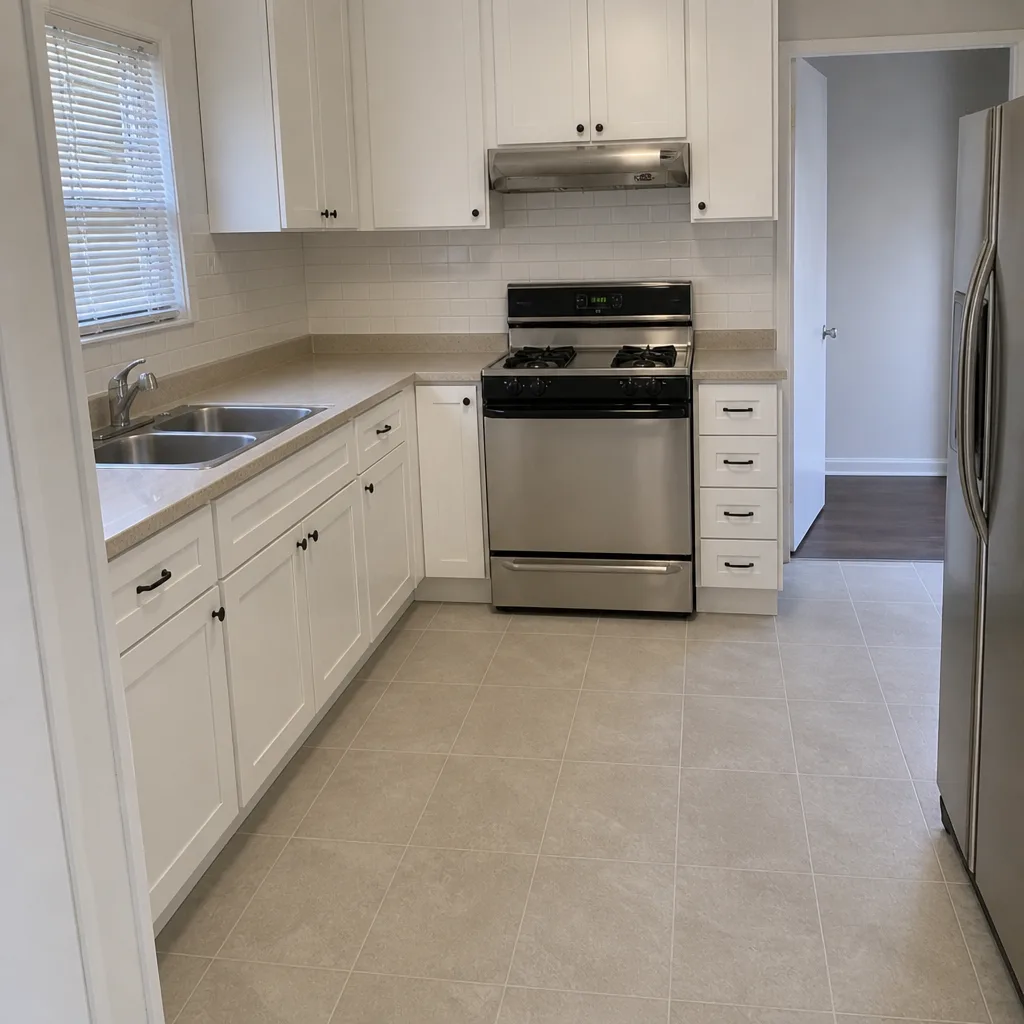 After
Frequently Asked Questions

Inspect at 30 days, again at six months, at the one-year mark, and then once a year after that, with an exterior check before October each year in Anaheim. The first year matters most because that’s when most warranty-covered issues surface.
Skipping the manufacturer’s specified maintenance – like failing to seal grout on schedule, using the wrong cleaner on quartz, or power-washing composite decking at the wrong pressure – can void the warranty. Keep the care sheets and follow them.
Normal settling shows up as hairline cracks at inside corners, small nail pops, and seasonal door sticking. A structural concern is a crack that grows month to month, a crack wider than a credit card, one side of a crack sitting higher than the other, or a door that no longer closes in any season. Photograph and date anything you’re unsure about, and call if it’s progressing.
Yes. The dry, windy fall can open exterior caulk joints and stress painted trim. If those gaps aren’t sealed before winter rain, water intrusion follows. Do the exterior check in August or September, before the winds arrive.
A tube of quality caulk and an afternoon a few times a year costs very little. A repair after water intrusion from a failed joint typically runs several hundred to a few thousand dollars depending on what’s damaged. The schedule protects the investment.
Call your contractor first, while the warranty is open – the fix should be covered at no charge. If your contractor isn’t responsive or the warranty has closed, call a local contractor who can assess it. Our Penhallow Remodeling Anaheim home page explains how we handle post-project follow-up and what our guarantee covers.
Most of the routine checks – caulk, grout, door alignment, moisture under sinks – you can do yourself. Call a professional for anything involving water intrusion, growing cracks, loose tile, or structural movement. If you’re not sure, a free estimate visit is the safest call.
The Bottom Line
A finished remodel is a set of materials with different service intervals, and the homeowner who tracks them keeps the warranty intact and catches problems while they’re cheap. Run the 30-day walkthrough inside your contractor’s punch-list window. Do the six-month and one-year checks. Do the exterior check before October every year in Anaheim. Know the difference between settling and a structural defect. Keep the manufacturer care sheets. If you’re planning a remodel and want a contractor who hands you a written price, a written guarantee, and the documentation to maintain what we install, call Penhallow Remodeling Anaheim at (844) 320-2908 for a free estimate. You can also read more about our kitchen remodeling in Anaheim and how the written guarantee works on every project.
Written by the team at Penhallow Remodeling Anaheim.