Last updated November 18, 2026

Free written scope consultation - allowances, timeline, and change-order rules on paper before a single trade is scheduled
DIY vs Professional Kitchen Remodeling: What’s Safe to Do Yourself
Homeowners who DIY the wrong parts of a kitchen remodel don’t save money. They defer the professional cost and add a correction cost on top of it. A homeowner in Anaheim who moves a gas line to save $600 often pays $2,400 later to have it redone and inspected, plus a delay that pushes the whole project back three weeks. The tasks that genuinely save money when you do them yourself are the visible, reversible ones: demolition, painting, hardware, appliance swaps on existing lines. The tasks that quietly cost you are the ones buried in a wall or a permit file. This guide draws the line clearly, so you know which side of it each job falls on before you pick up a pry bar.
Quick Answer
In a kitchen remodel, you can safely DIY demolition, cabinet painting, hardware swaps, backsplash prep, and appliance installation on existing hookups. You should not DIY gas line work, electrical panel or circuit changes, plumbing rough-in, structural wall removal, or cabinet installation. Those tasks involve live systems, permits, or tolerances that show up as failures months later, and in Anaheim they can affect your insurance and your ability to sell the house.
Styles & brands we work with
- Kitchen remodeling
- Bathroom remodeling
- Home additions & ADU
- Roofing
- Windows & doors
- Driveway & pavers
- Fence
Table of Contents
- The Real Decision: Hidden Cost, Not Skill
- What’s Genuinely Safe to DIY (and Saves Real Money)
- What You Should Never DIY (Code, Safety, Warranty)
- What “Permit-Required Work” Actually Means for You
- The Cabinet Installation Trap
- How DIY Work Affects Your Warranty
- A Decision Framework You Can Use Today
- Common Mistakes to Avoid
- When to Call a Professional
The Real Decision: Hidden Cost, Not Skill
Most DIY guides frame the question as a skill test. Can you cut a straight line? Can you follow a YouTube tutorial? That misses what actually goes wrong. The tasks that cost homeowners the most aren’t the ones they can’t figure out; they’re the ones they can figure out just well enough to pass a visual check and fail a real one.
Consider a simple example. Swapping a pendant light for another pendant on the same circuit is a five-minute job most people can handle. Adding a dedicated 20-amp circuit for a new wall oven is the same category of work to a homeowner with a screwdriver, and a completely different category to an electrician working inside a panel. One is reversible in an afternoon. The other can trip an inspection, void a warranty on the appliance, and in Anaheim, sit on a title report as an open permit when you go to sell. Same tool bag. Very different risk.
We’ve seen this pattern repeatedly in Anaheim kitchens. The homeowner finished the demo, painted the cabinets, and hung the backsplash beautifully. Then they ran a new outlet themselves to power a coffee bar and put it on the same circuit as the fridge. The compressor kicks it every time the toaster runs. That fix isn’t aesthetic; it’s a re-pull through finished drywall.
The right question isn’t “am I skilled enough?” It’s “if this goes wrong, what does the correction cost?” If the answer is a repaint or a swap-back, DIY it. If the answer is opening a wall, touching a live system, or failing an inspection, hire it. That single filter cuts through most of the confusion.
What’s Genuinely Safe to DIY (and Saves Real Money)
These tasks are visible, reversible, and don’t touch permitted systems. They’re also the ones where a homeowner’s labor translates cleanly into savings because there’s no inspection and no hidden tolerance. If you’re planning a Kitchen Remodeling in Anaheim, keeping these in your own hands can trim $3,000 to $6,000 off the total without adding delay.
- Demolition (with care): Pulling old cabinets, countertops and flooring is hard work but reversible risk. Bag the debris, wear gloves and eye protection, and shut off water and gas at the mains before you start. Cap any exposed gas stub with an approved cap and get it checked; don’t leave an open line.
- Painting cabinets: This is where DIY delivers the biggest return. Prep is 80% of the job: degrease with TSP, sand to dull the finish, prime with a bonding primer, then two coats of a cabinet-grade paint, sprayed or rolled with a fine-nap roller. Hand-painted cabinets done well look as good as factory finish and save $2,500 to $5,000 over a professional paint job.
- Hardware swaps: Pulls, knobs, hinges and drawer slides are a Saturday project. Fill old holes with wood filler, drill new ones with a template, and don’t skip the hinge alignment step.
- Appliance installation on existing lines: If your new range uses the same 240V outlet and gas stub as the old one, swapping it is manageable. If the outlet, amperage, or gas fitting changes, stop and call an electrician or plumber.
- Backsplash tile: With a level ledger, a wet saw and patience, backsplash tile is a genuinely achievable DIY job. It’s visible and reversible; a bad tile job can be pried off and redone without disturbing the wall.
- Cabinet interior organizers, under-cabinet lighting on a plug, and shelf liners: Small, reversible, and honestly worth the money.
- Painting walls and ceiling: Anaheim’s dry climate means most interior paint cures fast, but our dry Santa Ana wind days can flash the edges before you finish a wall. Work a room at a time and keep a wet edge.
Tasks to Skip Entirely If You Value Sleep
Two more that feel safe and aren’t: cutting a hole in a wall for a cabinet vent (you don’t know what’s inside until you open it, and in Anaheim’s older 1950s-60s housing stock, that can be knob-and-tube wiring or a cast-iron drain stack), and drilling into a wall above the counter without a stud finder (there’s a reason the previous owner’s tile has a crack).
What You Should Never DIY (Code, Safety, Warranty)
The tasks on this list share a trait: a mistake isn’t visible until much later, and the correction cost is large. Some of them can also hurt you. We’re not being dramatic when we say gas work and panel work are dangerous; we mean it plainly.
- Gas line work (ranges, cooktops, water heaters): Any work on a gas line, including moving a stub six inches, requires a licensed plumber and an inspection in Anaheim. A small leak is invisible, and the failure isn’t a crooked cabinet door; it’s a call to the fire department. This is a hard stop.
- Electrical panel work and new circuits: Adding a 240V line for an induction range, moving a junction box, or adding a dedicated outlet all fall inside the panel. The hazard is real: live conductors inside the panel can kill you, and a homeowner pulling a permit to do their own electrical work still has to pass the same inspection an electrician does. If you’re not sure you can, call an electrician.
- Plumbing rough-in: Moving a sink drain, rerouting a supply line, or relocating a dishwasher drain are all behind-the-wall work. Small leaks inside a wall in Anaheim’s hot summers turn into mold fast. Soldered copper and PEX crimps both have a learning curve that a $400 plumber call resolves in an hour.
- Structural wall removal: A “quick” wall removal can be a load-bearing header project. You need an engineer, a permit, and inspection before the first hammer swing. Do not do this yourself.
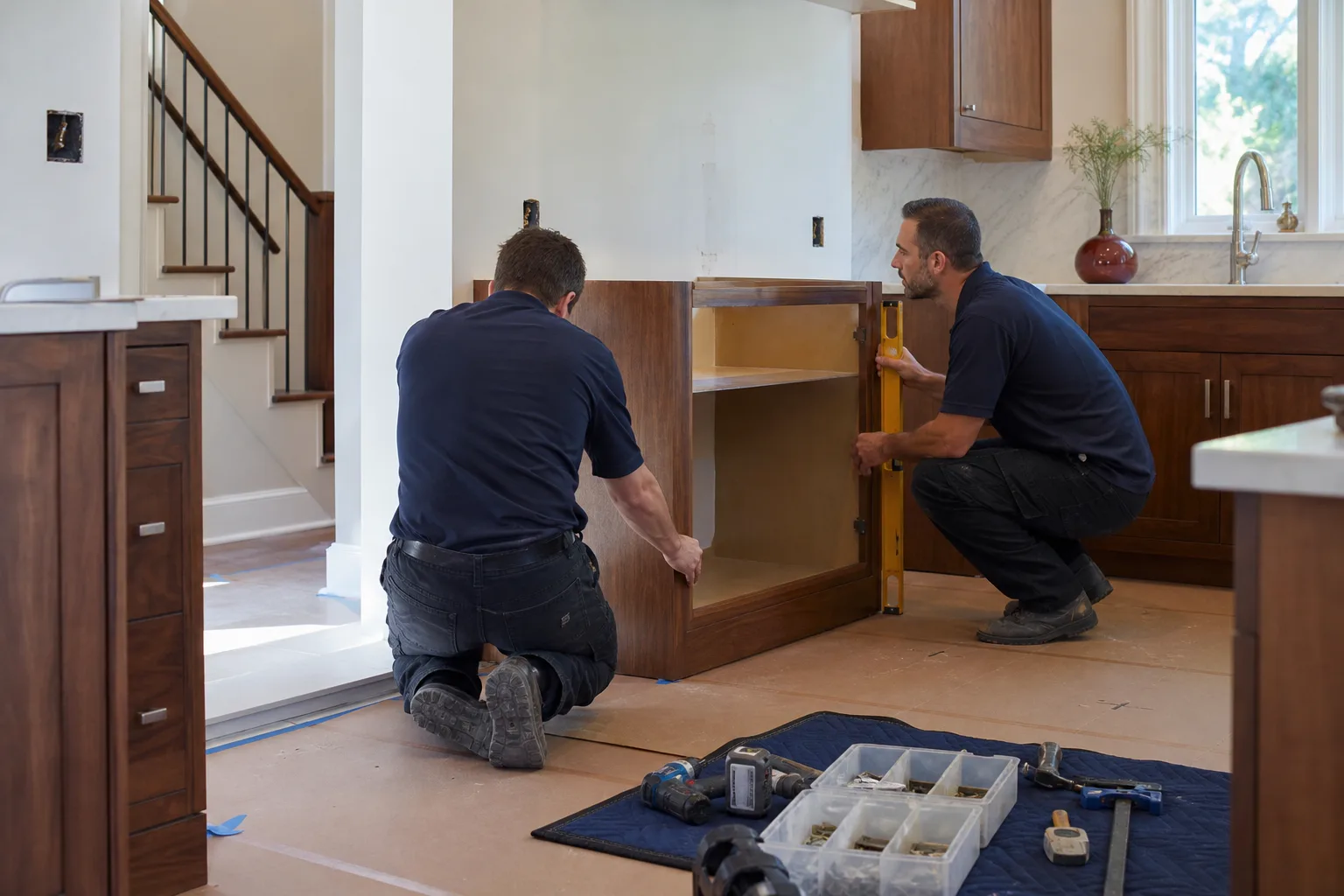
- Cabinet installation: Covered in detail below, but the short version: hanging uppers requires plumb, level and stud alignment that most DIYers underestimate. The failure mode (crooked doors that don’t close flush) shows up weeks after install.
If you’re planning a full scope that touches any of the above, this is where we’re honest: the piecemeal DIY route tends to cost more than a scope-managed approach. The General Contractor in Anaheim route lines up the trades and permits in the right order so the job moves once, not three times.
What “Permit-Required Work” Actually Means for You
This is the section most homeowners skip, and it’s the one that can cost the most at resale. A permit isn’t just a fee; it’s a record that a licensed professional did the work and an inspector confirmed it. When you do permit-required work yourself without a permit, you’re not just skipping a fee. You’re creating a paper trail problem.
In Anaheim, the specific consequences matter:
- Homeowner’s insurance: Many policies exclude coverage for unpermitted electrical, plumbing, or structural work. If a fire starts in an outlet you installed yourself, the adjuster will ask for the permit. If there isn’t one, the claim can be denied or complicated in a way that costs more than the whole remodel.
- Title transfer: When you sell, the buyer’s inspector will find the unpermitted work. At best, you redo it before closing. At worst, the buyer walks or discounts the offer by more than the cost of doing it right the first time. Title companies in Anaheim flag open permits, and closing can stall while you sort it out.
- The “professional” who offered to skip the permit: If a contractor suggests doing permit-required work without pulling a permit, that’s your signal to look elsewhere. It’s the single most reliable tell.
- Insurance for the contractor: A licensed, insured contractor doing permit-required work has insurance that covers their work. You don’t. If the electrician’s mistake causes damage, the contractor’s policy handles it. If your mistake does, it’s on you.
Permits for a typical Anaheim kitchen remodel run $500 to $2,000 depending on scope, and the inspection adds two to three days to the timeline. That’s the honest cost of doing it right, and it’s a fraction of the resale hit if you don’t.
The Cabinet Installation Trap
Hanging upper cabinets looks like a two-person weekend job. It isn’t. Cabinets are heavy, alignment is unforgiving, and the failure mode doesn’t show up the day you hang them. It shows up two weeks later as doors that swing open on their own or close with a bump against the frame. We call this the crooked-door problem, and it comes from three common missteps.
First, walls aren’t flat. In Anaheim, where a lot of the housing stock dates to the 1950s and 1960s, walls can be out of plumb by a half-inch over an eight-foot span. You can hang a level cabinet on a wall that isn’t, and the doors will not close flush. Second, studs aren’t always where they should be. A stud finder helps, but the cabinets have to be anchored into framing, not drywall anchors, and the anchor points need to fall on the studs. Third, uppers need to be shimmed and checked plumb in both directions, and most DIYers check one. The result: a cabinet that looks fine until you add weight.
We source KraftMaid and Wellborn cabinetry for our Anaheim kitchen projects, and we install them with the same discipline the manufacturer specs for anchoring. When a cabinet is installed out of tolerance, it also voids the manufacturer’s warranty, which is the quiet cost of a crooked-door problem. If you’re set on doing the lower cabinets yourself and hiring out the uppers, that’s a reasonable split; just make sure the professional’s scope includes anchoring and plumb, and get it in writing.
If you want to see how we handle a full kitchen scope from demo to final inspection, our Penhallow Remodeling Anaheim home page lays it out, and our Bathroom Remodeling in Anaheim page shows the same discipline on the adjacent room.
How DIY Work Affects Your Warranty
Here’s the part that surprises homeowners most: when you DIY part of a remodel and hire out the rest, the warranty on the professional’s portion doesn’t automatically cover your portion. That’s why every Penhallow project includes a written price before any work starts and a written guarantee on the finished work, and why we’re specific in writing about what scope the guarantee covers.
If you demo your own cabinets and a pro installs new ones, the guarantee covers the installation: anchoring, alignment, doors closing flush, and the cabinets staying put. It doesn’t cover damage to the subfloor from a sledgehammer, and it doesn’t cover a wall that wasn’t repaired before the cabinets went up. If you run your own electrical and the pro connects the range hood, the guarantee covers the hood connection, not the circuit. This isn’t fine print; it’s just how scope works. The person who did the work stands behind it.
That clarity matters because the failure mode most homeowners fear is the callback they can’t get. “We’ll be back” that never happens. Our 365-Day Done Right Promise is a written commitment: if the work we performed fails inside the guarantee period, we come back and fix it at no charge, and if a repair fails, we return for a free second visit with no service call fee. That promise is only meaningful when the scope is clear. If you DIY the demo and the pro installs, get the scope in writing before the first truck pulls up.
A Decision Framework You Can Use Today
When you’re standing in your Anaheim kitchen with a pry bar in one hand and a phone in the other, run every task through this short framework. We use it ourselves when scoping a project.
- If the mistake requires opening a wall to fix, hire it. Plumbing, electrical, and any behind-the-drywall work falls here. The correction cost is measured in days and drywall, not hours.
- If it touches a live system (gas, water, electricity at the panel), hire it. The safety stakes are real. A trained professional’s insurance and license exist for a reason.
- If it affects a permit inspection, hire it. The inspector will not pass work that isn’t up to code, and the correction is always more expensive than the original job.
- If it’s visible and reversible, DIY is a reasonable call. Paint, tile, hardware, demo, appliance swaps on existing lines. If it goes wrong, you can undo it without opening anything.
- If the mistake voids a manufacturer’s warranty, read the warranty first. Cabinet, appliance, and fixture warranties often have installation clauses. A quick read saves the argument later.
That’s the whole test. Skill is secondary; the reward is speed and money saved on the reversible stuff, and the risk is the hidden cost on the rest.
Common Mistakes to Avoid
- Demo day without the mains shut off. We’ve seen homeowners pull a cabinet and find an active gas stub. Shut off gas and water at the mains, cap exposed lines, and verify before the first swing of the hammer.
- Running a new circuit to save a call-out fee. In Anaheim’s older housing stock, adding a 240V range line yourself frequently fails inspection and starts a re-pull through finished drywall. The savings evaporate fast.
- Skipping the permit because “it’s just cosmetic.” Anything touching plumbing, electrical, gas, or structure is permit-required, regardless of how cosmetic the finished result looks.
- Hanging cabinets on drywall anchors. They have to be anchored into framing. If you’re not sure what’s behind the drywall, get someone who is.
- Forgetting the Santa Ana wind problem. Anaheim’s dry, windy days flash the edges of paint before you finish the wall. Plan your painting around weather, and keep a wet edge a room at a time.
- Verbal scope with your pro. If you’re splitting the job, the scope and the warranty have to be on paper before work starts. A verbal handshake is the setup for the callback that never happens.
- Assuming your homeowner’s policy covers DIY. Check with your insurer before you decide to run your own circuit or reroute a supply line. In Anaheim, an unpermitted, DIY electrical repair is often excluded from coverage.
When to Call a Professional
Call a professional the moment your task list crosses into gas, electrical at the panel, plumbing rough-in, structural work, or cabinet installation. Also call if the scope is bigger than you can hold in your head: a full kitchen remodel, a layout change, or anything that requires a permit sequence and inspection. Those aren’t skill calls; they’re coordination and liability calls, and doing them yourself is how remodels stall.
Penhallow Remodeling Anaheim offers free estimates in Anaheim. You’ll get a written price before any work starts, a real arrival window, background-checked, uniformed technicians on your job, and the 365-Day Done Right Promise on every project. Our live phone coverage runs 24/7 with a real person answering, not a voicemail maze. Call (844) 320-2908 to schedule your free estimate, even if you plan to keep the paint and demo work yourself. We’ll scope it clearly so the warranty covers what it should.
See the difference
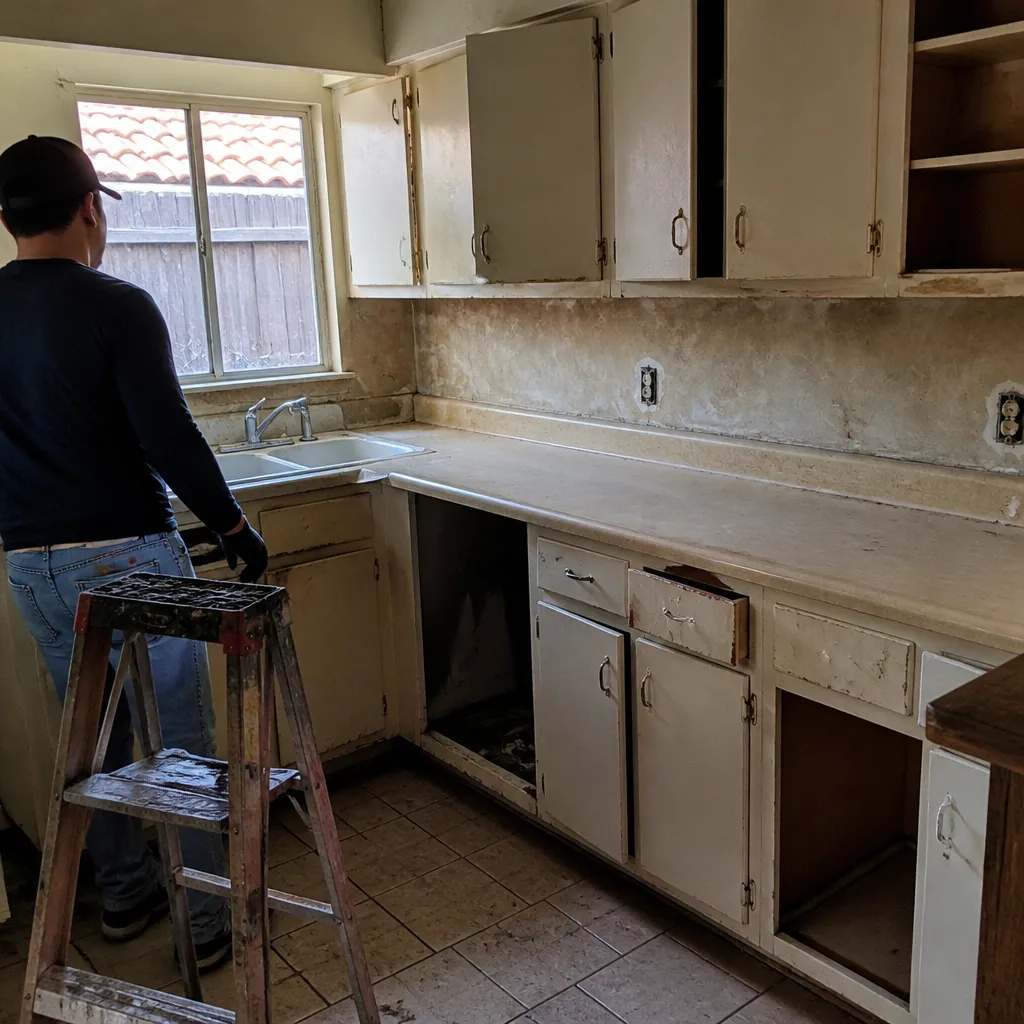 Before
 After
 Before
 After
 Before
 After
Frequently Asked Questions
You can safely DIY demolition, cabinet painting, hardware swaps, backsplash tile, wall and ceiling painting, and appliance installation on existing hookups. These tasks are visible and reversible, and most don’t touch permitted systems. Call (844) 320-2908 for a free estimate on the rest.
In some cases, yes, homeowners can pull a permit to do their own electrical work, but the work still has to pass the same inspection an electrician’s would. In practice, panel-level work, new 240V circuits, and anything touching a live conductor are best left to a licensed electrician. Call (844) 320-2908 to talk through the electrical scope; estimates are free.
Correction costs for unpermitted electrical, plumbing, or structural work in Anaheim typically run $2,000 to $8,000 depending on what’s behind the wall, plus the permit and inspection fees. That’s why an unpermitted shortcut rarely saves money over doing it right the first time. Call (844) 320-2908 for a free estimate before you open any wall.
We don’t recommend it for uppers. Hanging cabinets requires stud anchoring, plumb and level in both directions, and shimming that most DIYers underestimate. The failure mode, doors that don’t close flush, shows up weeks later, and it can void the cabinet manufacturer’s warranty. Call (844) 320-2908 for a written cabinet installation price; estimates are free.
It can, if the scope isn’t clear in writing. If a professional installs the cabinets and you did the demo, their guarantee covers the installation, not the demo. Get the scope in writing so the warranty matches the work. Call (844) 320-2908 to scope a split project cleanly.
Yes. Anaheim title companies flag open permits during transfer, and the buyer’s inspection will surface unpermitted work. At best, you redo it before closing; at worst, you discount the offer by more than the cost of doing it right the first time. Call (844) 320-2908 for a free estimate on a permitted scope.
The Bottom Line
The DIY-versus-hire question isn’t about skill. It’s about hidden cost. Paint, demo, hardware and tile are genuinely safe to do yourself and save $3,000 to $6,000 on a typical Anaheim kitchen. Gas, panel-level electrical, plumbing rough-in, structural walls and cabinet installation carry correction costs, permitting problems, and warranty implications that quietly erase those savings. Run every task through the framework above: if a mistake opens a wall, touches a live system, or affects a permit, hire it; if it’s visible and reversible, DIY is a smart call. Get the scope in writing either way, so the guarantee covers exactly what it should. Call (844) 320-2908 for a free estimate in Anaheim.
Written by the team at Penhallow Remodeling Anaheim.