


KraftMaid General Contractor in Anaheim: A Homeowner’s Guide
KraftMaid makes a solid cabinet. What they don’t control is whether it gets installed level, scribed tight to your walls, or shimmed so the doors close without a gap. That part is entirely on whoever your contractor sends. This guide covers what separates a clean KraftMaid install from an $8,000 order that ends up looking like a home center special, and what to put in writing before the first box comes off the truck in Anaheim.
If you’d rather hand the coordination to someone who does this every week, call (844) 320-2908 and we’ll walk through your project. Estimates are free, and you get a written price before anything starts.
Why KraftMaid Cabinets Live or Die on the Installer
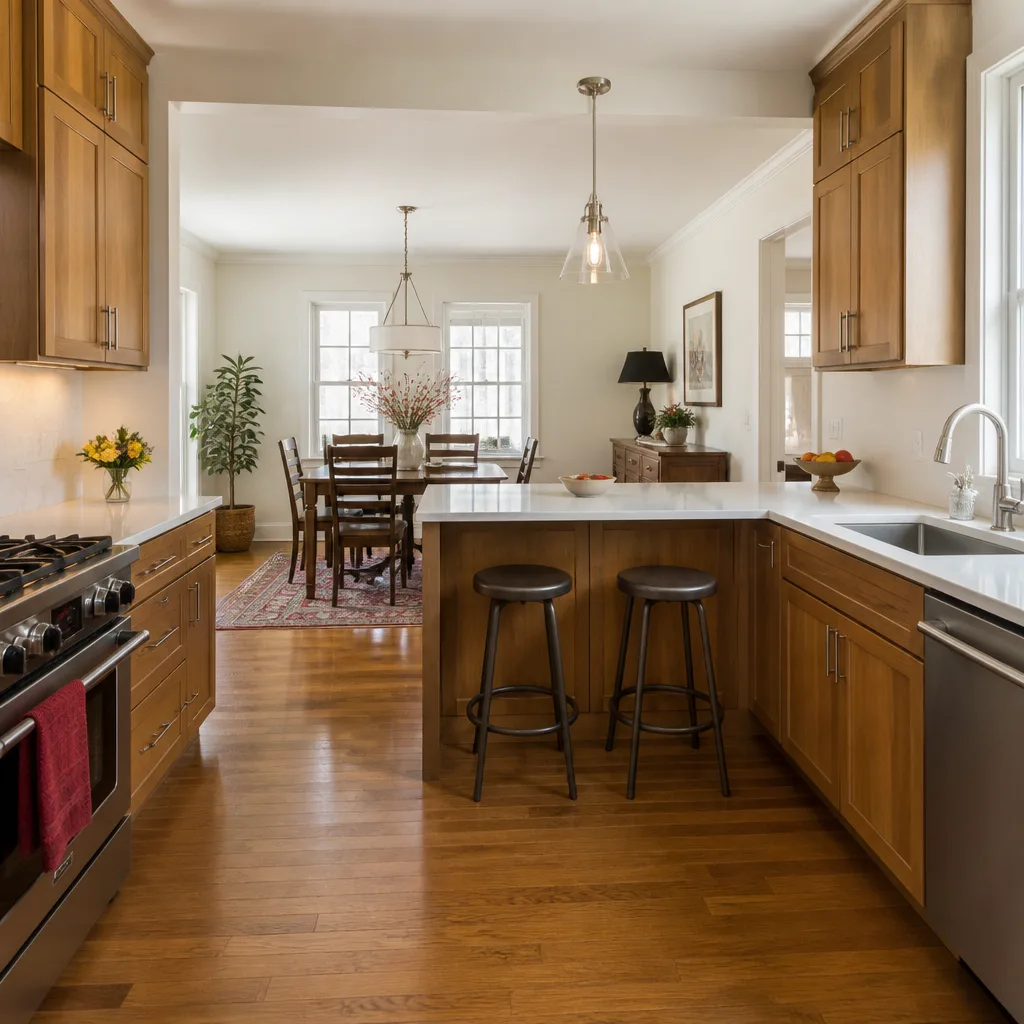
A factory-built cabinet is a precision product. The box is square, the door hinges are pre-drilled, and the finish is cured before it ships. All of that quality depends on the floor it sits on and the walls it sits against, and those two things are rarely square or level in an Anaheim home. The installer’s job is to bridge the gap between a perfect cabinet and an imperfect room. Skilled hands do it with shims, scribes and filler strips so the result looks like it grew there. Sloppy work leaves you with doors that rub, a reveal line that wanders, and a gap at the wall you’ll stare at every morning.
This is why a “great deal” on installation is usually a story about what got skipped. On flat-rate installs, the crew is paid per box. They don’t have time to level a floor over an 8-foot run, and they don’t get paid to scribe a filler strip to a bowed plaster wall. We’ve seen it again and again: a homeowner orders beautiful KraftMaid cabinetry, hires the cheapest installer, and a year later is calling us to find out whether the doors can be fixed. Sometimes they can. Sometimes the boxes have to come back out.
Delivery Lead Times vs. Installation Scheduling: Why Coordination Matters
KraftMaid cabinets typically arrive four to eight weeks after you place the order, and that window is a logistics fact, not a number the installer controls. The mistake we see most often is scheduling the install before the flooring and countertop trades are locked in. Cabinets sit on top of flooring in most kitchen layouts, which means the floor goes down first. Countertops get templated only after the base cabinets are set and level, and templating adds another one to two weeks before the slabs come back. If those steps run out of order, you’re paying someone to pull cabinets back off the wall, or you’re buying new flooring because the old plan no longer fits.
The right sequence in an Anaheim kitchen usually looks like this:
- Confirm the KraftMaid delivery date in writing, with a two-day window for the truck.
- Finish flooring before the cabinets arrive.
- Install and level the base cabinets, then template the countertops.
- Install the uppers, crown, toe kick and hardware while countertops are being fabricated.
- Set the countertops, then reconnect plumbing and finish electrical.
- Do a final adjustment visit after the first few weeks of use.
The delivery date and the install date need to be coordinated with the flooring and countertop schedules, not treated as separate appointments. A contractor who can’t tell you how those three calendars fit together hasn’t planned your job yet. When you’re ready to talk through the timeline for your own project, our Kitchen Remodeling in Anaheim page has the full scope.
Scribing and Filler Strips: The Decisions Nobody Tells You About
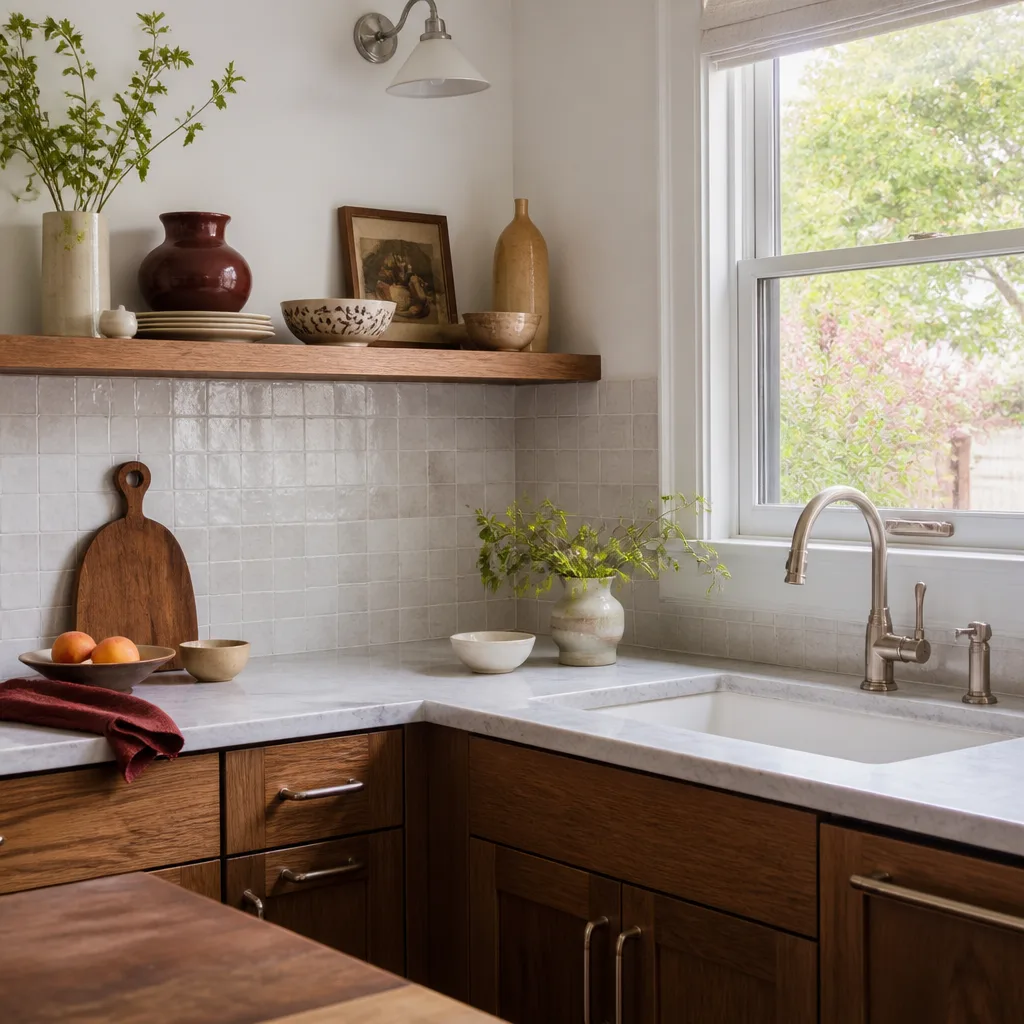
Scribing is the process of cutting a filler strip or cabinet edge to match the actual shape of your wall. It sounds minor. It’s the difference between a custom look and a gap you can slide a nickel into. Walls in Anaheim homes are rarely plumb – a 1950s ranch in the Colony District and a newer build near the Platinum Triangle both have their own quirks, and the older ones have had decades to settle. When a cabinet run ends at a wall that leans a half inch over six feet, the installer has three options: push the cabinet tight and leave the doors misaligned, run a filler strip and scribe it to the wall, or cheat the gap to the nearest corner where it’s less visible. Only the first option looks right.
Filler strips themselves come in two sizes, and the choice matters. A standard filler is a flat board; a scribed filler is cut to follow the wall. For a painted kitchen, a scribed filler is almost invisible. For a stained or natural-finish kitchen, the filler has to match the cabinet finish, which means ordering it from KraftMaid with the cabinet package rather than cutting it on-site. Ask your contractor which fillers are in the order and whether they’re finish-matched. The answer tells you a lot about how the job was planned.
The other decision is corner treatments. A blind corner cabinet needs a filler at the wall side, and an angled corner needs the cabinet itself ordered in the right configuration. Both need to be decided before the order goes to KraftMaid, not after the boxes arrive. In our experience, the homeowners who end up happiest are the ones who sat down with a written layout and a filler plan before signing the order, not after.
What a Written Scope for a KraftMaid Install Should Include
“Install cabinets” is not a scope. It’s a sentence that lets everyone imagine a different job. A written scope you can hold a contractor to spells out each piece of work and the price attached to it, so the number on day one matches the invoice. Here’s what a real KraftMaid installation scope covers in an Anaheim kitchen:
- Removal and haul-off: tearing out the old cabinets, countertops and any damaged drywall, and disposing of the debris. Disposal fees vary, so get them itemized.
- Wall and floor prep: patching, leveling a sloped floor, and confirming the walls are plumb enough to hang cabinets.
- Cabinet installation: base and wall cabinets, including leveling, shimming and fastening to studs.
- Filler strips and scribing: finish-matched fillers cut to the wall.
- Toe kick and crown molding: both are separate line items in most scopes and both affect the finished look.
- Hardware: drilling for pulls and knobs, aligning them so they’re level across every door, and installing soft-close hinges if they weren’t pre-installed.
- Countertop templating: coordination with the countertop fabricator, which is its own trade.
- Adjustment visit: a return trip after the kitchen’s been used for a few weeks to adjust hinges, catches and drawer glides.
That last item is the one most contractors skip. Doors settle. Hinges work loose. A kitchen that felt perfect on install day can develop a rubbing door within a month, and the fix is a ten-minute adjustment. A scope that includes a return visit tells you the contractor expects the job to keep working after they leave. Our General Contractor in Anaheim page covers how we handle the full scope on a cabinetry project, from demolition through the final adjustment.
Anaheim’s Older Homes: Sloped Floors and Out-of-Square Kitchens
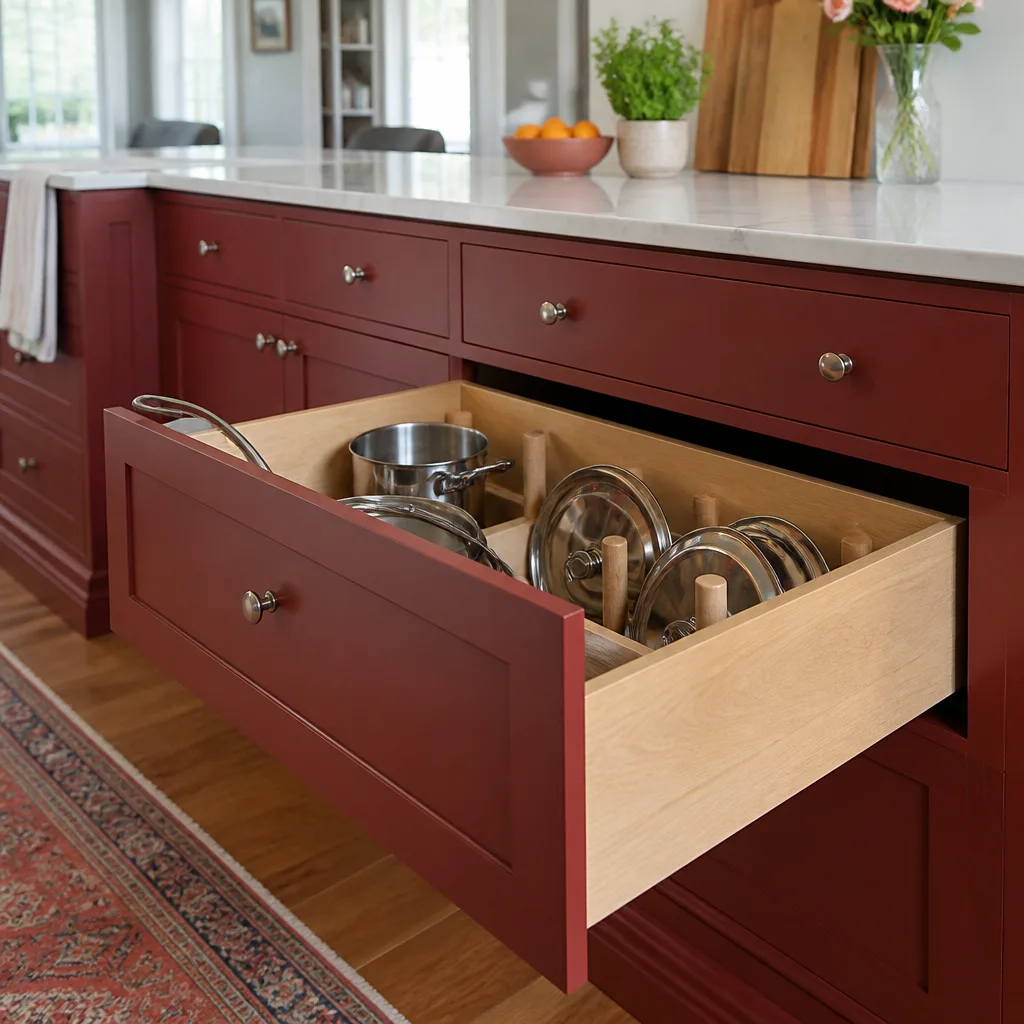
Anaheim has a lot of housing stock built between 1950 and 1980, and kitchens from that era were not built to today’s tolerances. Floors slope. Walls bow. The room is often a quarter inch out of square over eight feet, which doesn’t sound like much until you try to set a straight run of cabinets against it. A qualified installer handles this with specific techniques. A flat-rate crew skips them because the schedule doesn’t allow for it.
Here’s what a careful install looks like in an older Anaheim kitchen:
- Floor leveling: a self-leveling compound or shimmed sleeper system under the cabinet footprint, so the base cabinets sit level even when the floor doesn’t.
- Wall shimming: wood shims behind the cabinet frame, adjusted at each stud, so the face of the cabinet is plumb even when the wall isn’t.
- Scribed fillers: cut to follow the actual wall line at each end of the run.
- Corner check: confirming the room is square before ordering, so any angled cabinet is ordered at the correct angle.
- Door reveal check: walking the whole run after install and adjusting every hinge so the gaps are even.
We’ve pulled cabinets out of a kitchen near Pearson Park where the previous installer had shimmed only the front of the base run and left the back floating. The cabinets looked fine until you opened a drawer and it slid out on its own. That’s the kind of thing a level check catches on day one and a rushed crew misses. If your home is older, the installer’s prep work matters more than the cabinet brand, and that’s true whether you’re buying KraftMaid or anything else. Bathroom cabinetry runs into the same issue, and our Bathroom Remodeling in Anaheim page covers how we handle it there.
KraftMaid’s Limited Warranty and What the Homeowner Is Responsible For
KraftMaid’s limited warranty covers manufacturing defects in the cabinet itself: the box, the doors, the drawer boxes and the finish, for the period stated in the warranty document that ships with your order. Read that document before you sign anything with your installer. It does not cover installation defects, and installation defects are what most homeowners actually call about. If a door sags because the cabinet it’s attached to was shimmed wrong, that’s on the installer, not KraftMaid. If the cabinet is out of level because the floor wasn’t prepped, that’s an installation issue. If water gets behind a cabinet because the countertop wasn’t sealed at the wall, that’s on whoever set the countertop.
The homeowner’s role in keeping the warranty valid is straightforward: keep the receipt and warranty paperwork, don’t modify or refinish the cabinets yourself, and report any defect to KraftMaid through the process in the warranty document. But the more useful protection is a written installation guarantee from your contractor. A guarantee that says “if the work fails, we come back and fix it at no charge” covers the failures KraftMaid’s warranty doesn’t, and it’s a promise you can hold a contractor to. We back every project with our 365-Day Done Right Promise, which does exactly that: if something fails within the year, we return and make it right at no charge. Cabinets and countertops are matched to brands like Cambria and Moen that carry their own warranties, so you end up with protection layered from the cabinet outward. Our Penhallow Remodeling Anaheim home page explains how that works in practice.
When to Call a Pro
Hanging a single upper cabinet over a laundry area is a weekend project. Coordinating a full KraftMaid kitchen in an older Anaheim home, with flooring, countertop templating, plumbing reconnections and a final adjustment visit, is not. If your kitchen has sloped floors, out-of-square walls or a countertop that needs templating, the coordination alone is worth a call. If you’ve already ordered the cabinets and the installer hasn’t asked about filler strips or floor leveling, that’s a warning sign worth acting on before the truck arrives. We’ve seen homeowners save thousands by making one phone call before install day instead of after.
Related services in Anaheim: Kitchen remodeling, bathroom remodeling, and whole-home remodels. If you’re planning a cabinetry project, start with the kitchen page or the general contractor page and we’ll route you to the right scope.
The Bottom Line
KraftMaid makes a good cabinet. The install is where the quality either shows or disappears. Level floors, plumb walls, scribed fillers, finish-matched toe kick and crown, hardware aligned across the run, and a return visit to adjust hinges after the kitchen’s been used. Those items belong in the written scope, with a price attached, before the order goes in. And they belong on a schedule that puts flooring and countertop templating in the right order, not the order that happens to fit the contractor’s calendar. If you’re in Anaheim and need help, Penhallow Remodeling Anaheim offers free estimates. Call (844) 320-2908 and we’ll talk through your project, give you a written price before any work starts, and put the guarantee in writing alongside it. Our technicians have up to 22 years of experience with cabinetry installation, and every job comes with the 365-Day Done Right Promise.
Frequently Asked Questions
Installation labor for a full KraftMaid kitchen in Anaheim typically runs $3,500 to $9,000, depending on kitchen size, how out of level the floors are, whether old cabinets need removal and haul-off, and how much custom work the countertop reconnection requires. The cabinets themselves are a separate purchase and vary widely by door style and finish. Call (844) 320-2908 for an exact quote – estimates are free and you get a written price before any work starts.
It shouldn’t if the scope was written well. The risk is a contractor who ballparked the job without checking floor level or wall plumb, then found surprises under the old cabinets. We check those conditions before pricing, put the number in writing, and hold to it – no change orders on the labor unless you add work. Call (844) 320-2908 for a written estimate.
Most cabinet swaps don’t require a permit, but an install that moves plumbing, electrical or gas lines usually does, and Anaheim permitting depends on the scope. We handle the permits on projects that need them and tell you up front whether yours does. If you’re reconnecting a gas range or adding an island outlet, ask. Call (844) 320-2908 and we’ll figure out what your project needs.
Cabinet installation itself is usually three to five days once the boxes are on-site. The full kitchen project – flooring, cabinet install, countertop templating and fabrication, plumbing and electrical reconnection – typically runs four to eight weeks, which includes the lead time on the countertops. The cabinets are rarely the bottleneck; the countertop fabrication is. Call (844) 320-2908 for a timeline written into your estimate.
Written by the team at Penhallow Remodeling Anaheim.
Need Construction Help?
Call Penhallow Remodeling Anaheim - licensed & insured, here with fast after-hours help in Anaheim.
(844) 320-2908