Last updated November 18, 2026







Free written scope consultation - allowances, timeline, and change-order rules on paper before a single trade is scheduled
Kitchen Remodeling Troubleshooting: Common Problems and How to Fix Them
Cabinet doors that won’t close straight in January were probably installed on out-of-plumb walls in October. And the contractor who didn’t mention the wall condition before hanging those cabinets owns that callback. Most kitchen remodel problems that surface six months after completion were foreseeable at the rough-in stage. The signals were there. Somebody either said nothing or wasn’t looking. This guide teaches you to read the early signs and know exactly who’s responsible for fixing what. We’ve watched enough Anaheim kitchens age to know which failures are normal settling and which ones mean somebody cut a corner.
Quick Answer
Most post-completion kitchen remodel problems trace back to three things: failed substrate under tile, missing movement joints in grout, and cabinets hung without proper stud attachment. Cosmetic settling in the first 60 days is normal. Anything that moves, cracks, or pulls after that usually points to a construction-stage decision. Fixing it means documenting the symptom, contacting the contractor who installed it, and invoking the written guarantee – provided there is one.
Styles & brands we work with
- Kitchen remodeling
- Bathroom remodeling
- Home additions & ADU
- Roofing
- Windows & doors
- Driveway & pavers
- Fence
Table of Contents
- Reading the Symptom: What Your Kitchen Is Telling You
- Soft Floors Under New Tile
- Grout Cracking and Missing Movement Joints
- Cabinets Pulling Away From the Wall
- Cosmetic Settling vs. Structural Movement
- What a 365-Day Guarantee Actually Requires
- How to Document a Problem Correctly
- When the Original Contractor Won’t Return Calls
Reading the Symptom: What Your Kitchen Is Telling You
Every kitchen problem has a story. The trick is working backward. When a homeowner in Anaheim calls us about a cabinet door that scrapes the frame, the door isn’t the problem – the wall or the cabinet box is. When grout spiders across a backsplash six months in, the tile isn’t the problem – the substrate or the movement joint is. Learning to read symptoms backward to their causes is the single most useful skill you can develop as a homeowner who’s already paid for one remodel and wants to avoid paying twice.
A few symptom-to-cause pairings we see repeatedly in Anaheim:
- Cabinet doors that drift or won’t close flush: out-of-plumb walls insufficiently shimmed before cabinets were hung; sometimes a failed hinge, rarely the first answer.
- Grout lines cracking in a repeating pattern: no movement joints at the perimeter or over substrate seams.
- Tile that sounds hollow when tapped: poor thinset coverage; the tile is debonding from the substrate, not from the floor.
- Soft or spongy spots at thresholds: failed substrate or water intrusion under a poorly floored area.
- Backsplash separating from the wall at the top edge: normal settling in the first 30 days; not normal after 90.
The rest of this guide walks each of these through to what you can do about it, and who should be doing it. If you want the broad picture of what a properly built kitchen in Anaheim looks like before problems start, our Kitchen Remodeling in Anaheim page is the place to start.
Soft Floors Under New Tile
Soft floors are the single most expensive non-structural failure we see in Anaheim kitchens. They almost always trace to one of two problems: the wrong substrate installed under the tile, or a substrate installed correctly but on a subfloor that wasn’t flat enough to support it. Cement board substrate (the moisture-resistant layer behind your tile) needs a flat, structurally sound subfloor. When a previous installer laid it over a flexing floor or skipped the deflecting check, the cement board loosens, the thinset pops, and you get what feels like a soft spot or a hollow tile underfoot.
Here in Anaheim, we see this most often in older homes near the Colony District where additions have created stepped floor heights and half-inch subfloors were used where three-quarter was needed. The heat and dry air don’t cause the failure, but they do make it show up faster: tile that’s slightly debonded expands and contracts through a dry summer and by fall the hollow spots are obvious.
- Tap-test the affected area with the handle of a screwdriver. A clear, hollow sound in a localized area means debonding.
- Note the pattern. One square foot is a tile problem. Six square feet in a line is a substrate problem.
- Look at the perimeter. If the tile is loose along a wall or cabinet toe kick, that’s often a sign the installer skipped the perimeter gap – a common shortcut.
- Pull the written scope. What substrate was specified? What thickness? What product brand? If the answer is “backer board,” that’s a category, not a spec, and you need more.
Repairing a soft floor is rarely a small job. If the substrate has failed, the tile comes up. That’s why this belongs on the list of problems worth fixing once and fixing right, not patching with patch material and a single tile swap.
Grout Cracking and Missing Movement Joints
Grout cracking is the most misdiagnosed problem in kitchen remodeling. Every homeowner worries it means something is structurally wrong. In fact, most grout cracks in Anaheim kitchens are cosmetic and come from one of three causes: the grout dried too fast, it was mixed too dry, or the installer skipped the movement joints that let the tile field expand and contract without cracking.
Our experience is that the third cause dominates. Movement joints (sometimes called expansion joints) are small gaps filled with a flexible sealant – usually at the perimeter of the tile field and over any place where the substrate is lapped or changes material. They look like grout lines but they’re flexible. Skip them and the tile field has nowhere to go when it expands. The stress lands in the nearest grout line, which pops.
Distinguishing the two grout problems
- Cracked grout along one line, alone: usually a moisture or mix issue; a repair, not a rebuild.
- Cracked grout in a repeating pattern across multiple lines: the field has no movement joint; the fix is to cut and replace the appropriate joints with flexible sealant.
- Grout cracking accompanied by tile lifting or sounding hollow: substrate failure underneath; get it looked at.
Before you call anyone, measure. Take a photo of the cracks with a tape measure in shot. If the entire kitchen backsplash grid is cracking at one joint, an experienced eye will spot the missing movement joint in one visit. If it’s showing up in a single line over a cabinet doorway, it’s likely a drying crack and a small repair.
Anaheim’s dry air pushes the field one direction and then the other with summer heat. Grout with no movement joint cracks faster here than it does in a coastal climate. That’s one reason we spec movement joints on every tile floor we build and why we won’t hand a written price that doesn’t include them.
Cabinets Pulling Away From the Wall
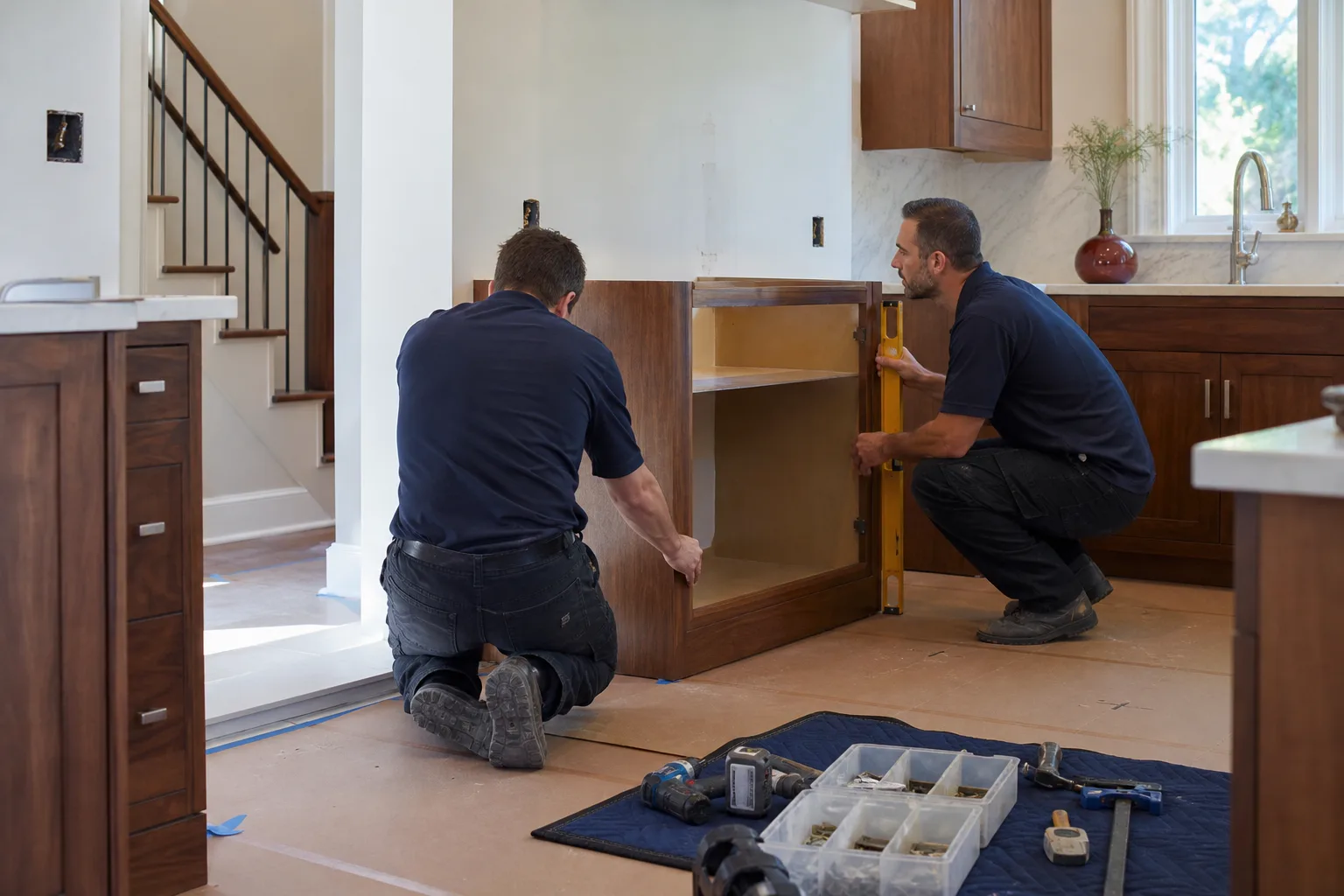
Cabinets pulling away from the wall is a serious warning sign, and it’s almost always an attachment problem during installation. Cabinets should be anchored into wall studs with screws long enough to bite, or into a properly installed blocking plate. When cabinets get hung with drywall anchors or into a stud that was found with no more than a stud-finder beep, they can drift – especially in upper cabinets over a dishwasher or microwave, where the appliance vibration adds load.
In Anaheim we see cabinet separation most often in homes built in the 1980s and 1990s, where the original kitchen had drywall-only zones (built-in soffits, plumbing walls) and the remodeler either didn’t add blocking or didn’t notice. When cabinets pull away, they also stress the countertop above. A separated upper cabinet can crack a granite seam within 30 days of the separation starting, and then you’re fixing two problems instead of one.
What to check
- Measure the gap at the top of the cabinet, at the bottom, and at each side. If it’s even across all four, the wall was out of plumb and got shimmed. If it’s wider at the bottom, the cabinet is pulling out at the bottom – usually attachment.
- Look for screw heads at the cabinet’s back rail (the top and side strips). Every upper cabinet should have two screws into studs minimum. If you can see only drywall anchors, that’s the problem.
- Check the countertop caulk line. A new gap at the caulk near the cabinet above hints the lower cabinet is also shifting.
Cabinet separation is a guarantee matter. If the cabinets were installed by a contractor who gave you a written guarantee, this falls squarely under “make it right.” Correcting the attachment is usually a day’s work – pull the cabinet, add blocking, re-hang, re-level. Assuming the cabinet hasn’t failed internally. If the cabinet box has warped, you’re looking at replacement, which is the reason the written guarantee is worth having on day one.
Cosmetic Settling vs. Structural Movement
Homeowners panic too fast about some things and ignore others that deserve attention. The dividing line is this: cosmetic settling is a change in appearance or texture, it stabilizes within 60 to 90 days of completion, and it stops moving after that. Structural movement is a change in position or dimension, it doesn’t stabilize, and it gets worse over time.
Cosmetic settling, which is normal, includes:
- Hairline cracks in caulk or grout at inside corners.
- A slight top-edge gap at a backsplash where the wall and cabinet meet.
- Minor cabinet door alignment drift in the first 30 days while the wood acclimates.
- Small nail pops in drywall – not common in kitchens but they happen.
Structural movement, which is not normal and needs attention, includes:
- Cabinets pulling 1/8 inch or more from the wall in under a year.
- Grout cracking accompanied by any tile lifting or sounding hollow.
- Doors or drawers that no longer operate at all, not just operate stiffly.
- Floor tile deflection you can feel when you walk across it.
- Anything that repeats after a first repair.
The “repeat” test is the most useful one. If a problem gets fixed once and stays fixed, it was cosmetic or isolated. If it comes back, the root cause wasn’t addressed. That’s the moment to stop patching and demand a diagnostic. If you’re also thinking about the bathroom, the same logic holds and we cover it in our Bathroom Remodeling in Anaheim page – tile substrate failures look identical whether the room has a sink or a range.
What a 365-Day Guarantee Actually Requires
A 365-day guarantee is only as good as the process behind it. On paper, “make it right” is easy to write. In practice, it means four things have to happen: someone has to answer when you call, someone has to come out and diagnose, someone has to fix it without charging you a service call, and someone has to confirm the fix held. When any of those four steps is missing, the guarantee has no teeth – it’s a marketing line, not a commitment.
The 365-Day Done Right Promise we make on every project works like this. If something we built fails within the first year, we come back and fix it. No service call, no re-inspection fee. If the first repair doesn’t hold, the second is free too. That’s what we mean when we say the guarantee is in writing on every project. If a contractor can’t put their guarantee in writing before you sign, ask why. The answer tells you most of what you need to know.
What “make it right” legally means
In California, a written guarantee on a home improvement contract is enforceable. If a contractor won’t perform, a homeowner has recourse through the Contractors State License Board, through small claims court, or through a general civil claim depending on the amount. The trick is documentation. A guarantee with no written scope of what it covers is much harder to enforce than one that names the components (cabinets, countertops, tile, flooring) and the period.
What “make it right” logistically means
- Response window: when you call, how long until a technician is scheduled? A real guarantee names an arrival window.
- Diagnosis vs. repair: is the return visit a diagnosis or a repair? Good guarantees are the latter.
- Parts and materials: who supplies replacements if the fix needs them, you or the contractor?
- Escalation: if the first technician can’t solve it, who’s next, and how fast do they get there?
For the broader picture of how we handle guarantees across the trade, our General Contractor in Anaheim page lays out the commitments we make on every job. The honest answer is that most of the value of a 365-day guarantee is the paper trail that forces the contractor to show up. That’s why we say the guarantee is what you’re buying, not the promise.
How to Document a Problem Correctly
If you need to invoke a warranty, documentation is the difference between a fast resolution and a long argument. The good news is that documenting a problem takes about 15 minutes if you know what you’re doing. The bad news is that most homeowners do it wrong – a text message with one blurry photo, sent three months after the problem started. Here’s how to do it properly.
- Photograph and date-stamp. Take three photos: a wide shot showing the location in the room, a mid-shot showing the component, and a close-up with a ruler or tape measure in frame to show the scale. Note the date on your phone’s photo metadata.
- Write down the timeline. When did you first notice it? What was happening in the house at the time? (Seasonal change, appliance cycling on and off, a party with extra foot traffic in the kitchen – all relevant context.)
- Send written notice. Email or text. Not a phone call, which leaves no record. Keep the tone factual: this is what I’m seeing, this is when it started, this is the address, this is the project date.
- Reference the written guarantee. Quote the date it was issued and the component you’re invoking. If the guarantee has a service line number, use it. If not, reference the original contract.
- Keep a log. Every call, every visit, every response. A calendar note per entry is enough. If it ever goes to mediation, this log is evidence.
- Don’t repair it yourself before the contractor has seen it. DIY repairs on a covered problem can void the guarantee – sometimes correctly, sometimes unfairly, but always with an argument.
If you’re in Anaheim and you’re not sure whether what you’re seeing is guarantee-worthy, call us. We won’t tell you to file a claim that isn’t warranted. The starting point is a photo and a description, not a service call.
When the Original Contractor Won’t Return Calls
This is the scenario that turns a five-hundred-dollar fix into a five-thousand-dollar fix: the original contractor has stopped answering or is out of business, and now the homeowner has to hire a new contractor to repair the previous contractor’s work. It’s the story the warranty was supposed to prevent. When it happens, you have more options than you think.
First, escalate in writing. Send an email or certified letter referencing the guarantee, the project date, and the specific defect. Set a deadline for a response – 14 days is reasonable. If it bounces or goes unanswered, you’ve documented a refusal to honor.
Second, check the contractor’s license status through the Contractors State License Board. If the license is inactive or expired, the guarantee may be worth pursuing a bond claim, especially if the contractor was bonded at the time of the project. If the license is active, a CSLB complaint is a real path – it can force a response.
Third, get a diagnostic from a second opinion. A written diagnosis from a licensed contractor (with the specific failure and the reason) is worth more than a homeowner’s description, and it’s often the documentation that unblocks a stale warranty claim.
What you can’t fix is a guarantee with no follow-up process at all. If the original contractor handed you a verbal “we’ll take care of it” and nothing on paper, you’re on your own to fund the repair. That’s the reason we put the guarantee in writing on every project – not because we expect to need it, but because the day a homeowner needs it, the paper has to be in their hand, not in our file cabinet.
For homeowners in neighborhoods across Anaheim – from the older homes off Lincoln Avenue to newer construction in Platinum Triangle – the practical answer is the same: get a written guarantee before you sign anything, and make sure it names the components and the term. Our Penhallow Remodeling Anaheim home page has the full list of what we commit to in writing. If you’re working through a project right now and want to know what your paperwork actually guarantees, this is the moment to check.
Common Mistakes to Avoid
- Hiring on price alone. The lowest bid almost always subtracts something from the build – usually the substrate or the movement joints – and that’s what fails first.
- Accepting a verbal estimate. If the price changes after demo day, the only thing that matters is whether you have a written number to hold the contractor to.
- Skipping the punch list. Walk the kitchen with the contractor before final payment and write down every imperfection, however small. The list closes faster when it’s on paper.
- Repairing a guaranteed problem yourself. A DIY patch voids most guarantees. Call first, even if the fix is obvious.
- Waiting too long to report a problem. A crack reported in week two is a guarantee matter. The same crack reported at month ten is a debate. Anaheim’s climate makes this matter more – the dry season from June through October is when small cracks grow fast.
- Ignoring the neighbor’s kitchen problem. If a nearby Anaheim homeowner with the same builder and the same floor plan has a failing substrate, that’s a signal about your own kitchen. Substrate failures repeat within neighborhoods.
- Believing “it’s just settling” past 90 days. Some settling is real. Most of what gets called settling after the three-month mark is a build failure with a nicer name.
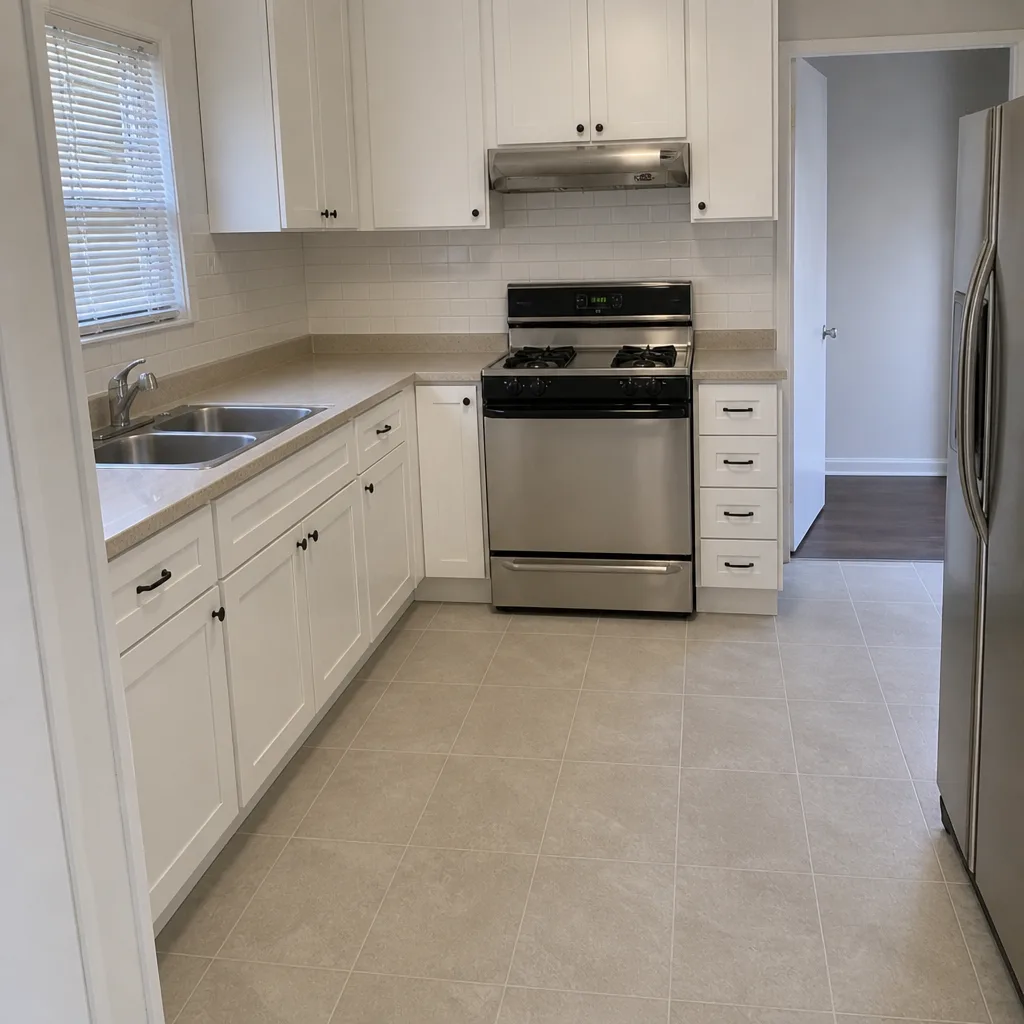
See the difference
 Before
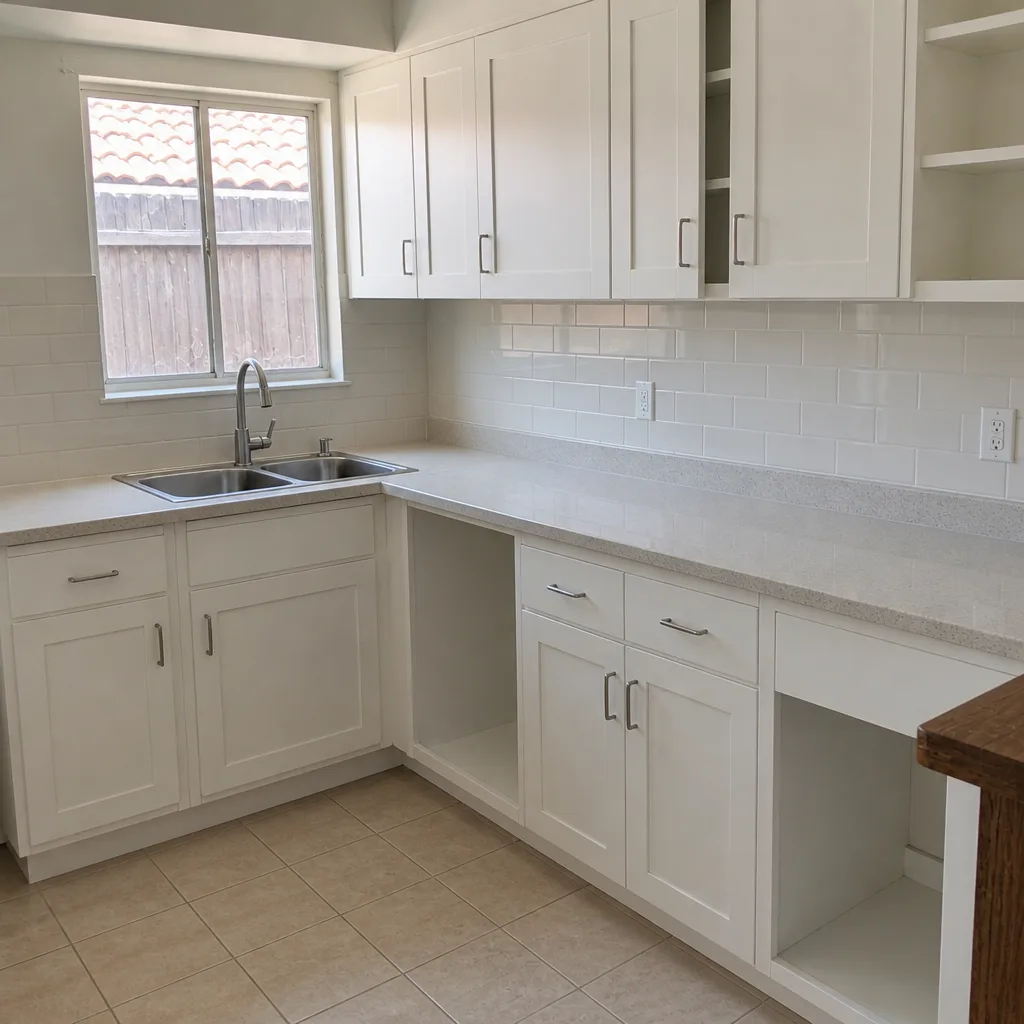 After
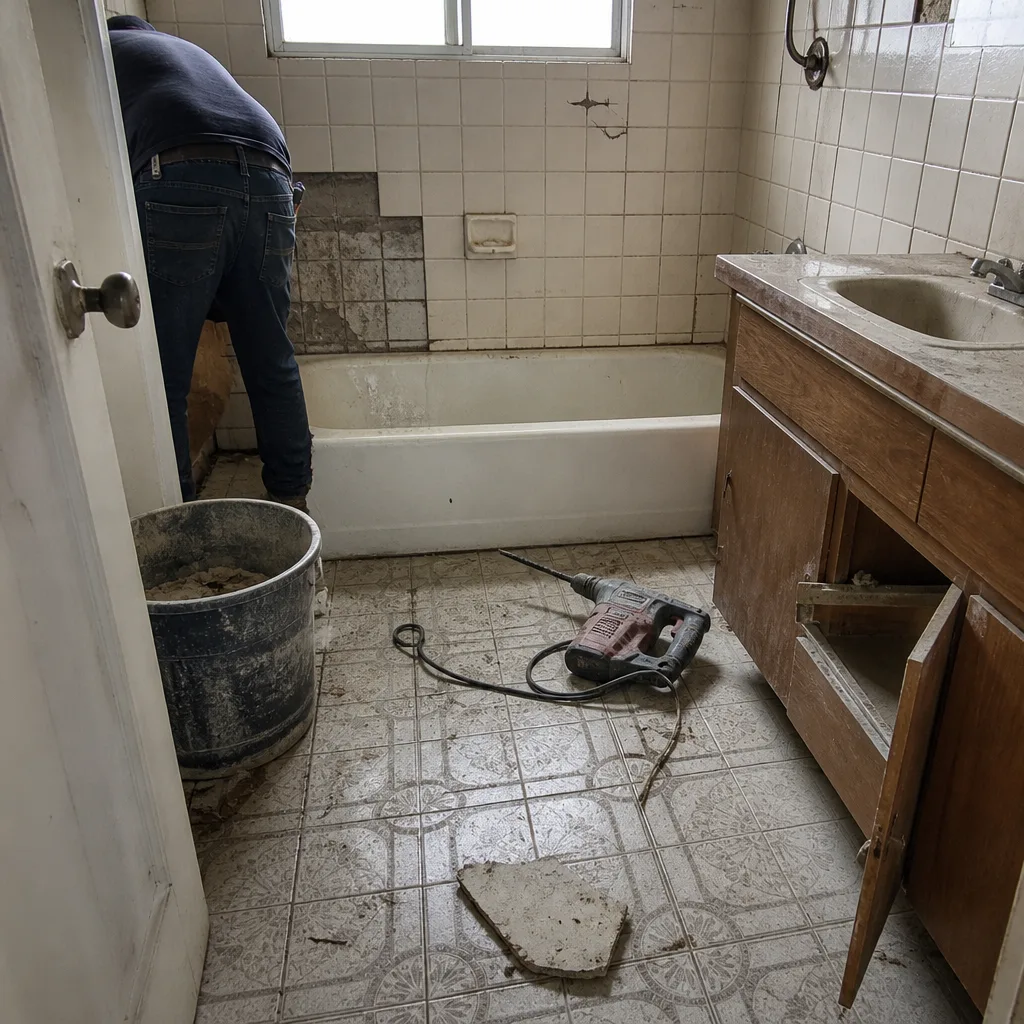 Before
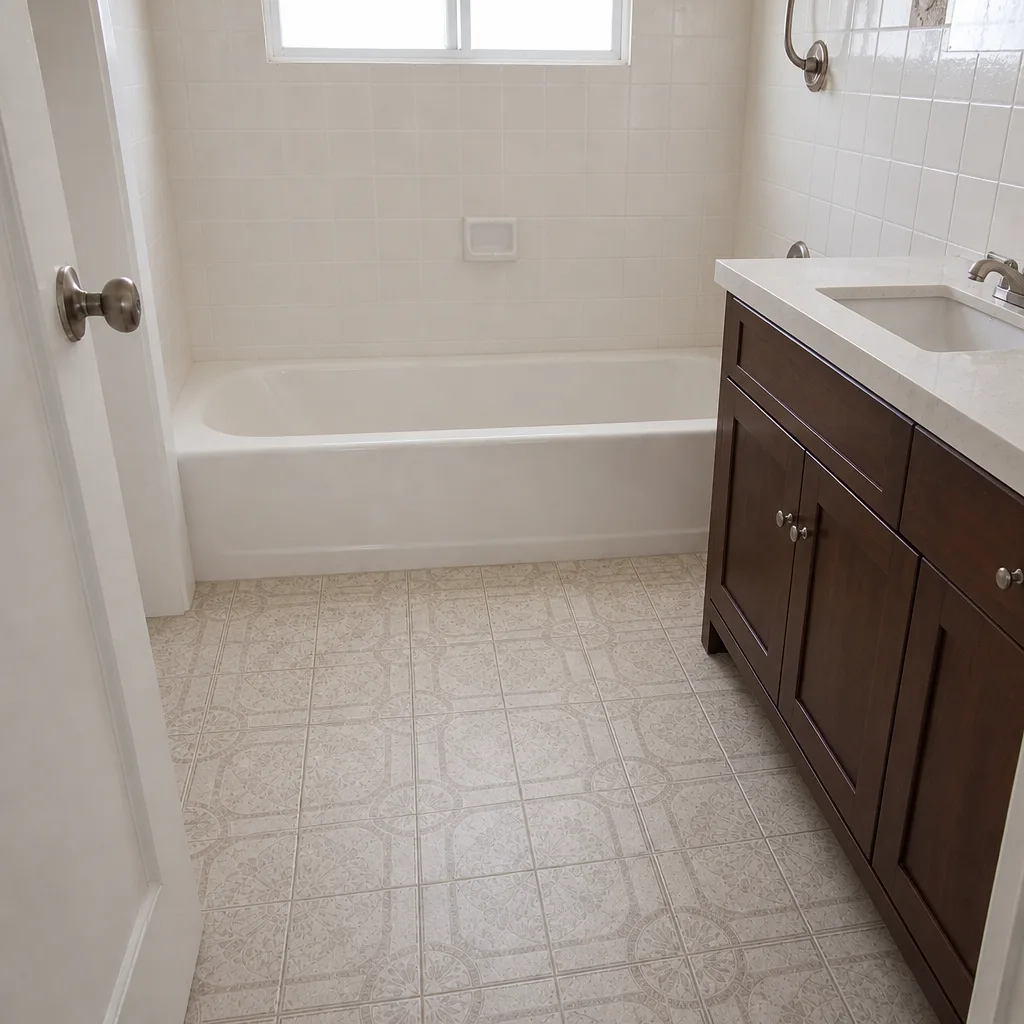 After
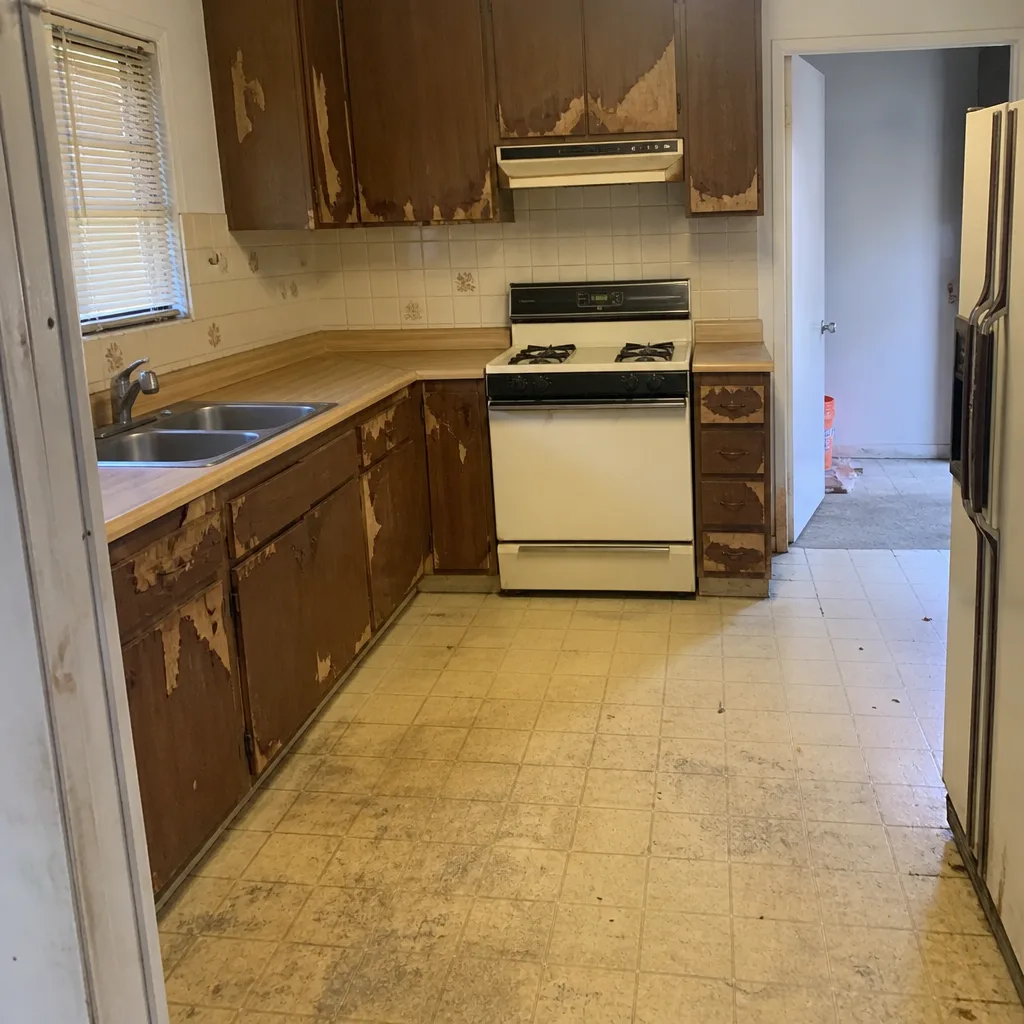 Before
 After
When to Call a Professional
Call a professional the moment you see any of the following: cabinets separating from the wall by more than 1/8 inch, tile that sounds hollow over more than a square foot, grout cracking in a repeating pattern, or any defect that has already come back after one repair. Those are the cases where the root cause lives at the rough-in stage and the fix is not cosmetic. If your guarantee is still active, call the original contractor first – in writing. If it isn’t, or the original won’t respond, a second opinion from a licensed general contractor is worth the visit. Penhallow Remodeling Anaheim offers free estimates in Anaheim – call (844) 320-2908, and a live person will answer whatever time you call. We’ll give you a written price before any work starts and a written guarantee when we finish. That’s the Kingswell standard: say the price before the work, show up in the window we gave, leave the place cleaner than we found it.
Frequently Asked Questions
Our 365-Day Done Right Promise covers every project we build for a full year from completion, and it’s issued in writing on every job. Not every contractor offers a full year – some offer 30 or 90 days, some offer nothing in writing at all. The length is less important than whether the guarantee names the components it covers and the process for invoking it. Ask to see the guarantee language before you sign the contract. Call (844) 320-2908 if you’d like to see ours.
Hairline cracks in grout during the first 60 to 90 days are usually cosmetic settling and not a sign of a build failure. Cracks that appear after 90 days, that repeat in a pattern across multiple lines, or that come with hollow-sounding tiles are not normal and point to a missing movement joint or a failed substrate. Anaheim’s dry heat makes grout stress visible faster than coastal climates do. If you’re past 90 days and still cracking, call (844) 320-2908 for a diagnostic.
Cabinets separating from the wall within the first year are an attachment problem, almost always from screws missing studs or missing blocking. Stop using the affected cabinet, photograph the gap with a tape measure in frame, and send written notice to the contractor who installed it. If the cabinets were installed under a written guarantee, this is a covered defect. If you’re in Anaheim and need a second opinion, we offer free estimates – call (844) 320-2908.
Repairing a failed tile substrate in an Anaheim kitchen typically runs $2,500 to $6,500, depending on square footage, whether the cabinets need to come up, and the replacement tile line you choose. A single-tile swap is $150 to $350. A substrate repair is a rebuild of the floor, not a patch, because the original install failed for a reason that has to be removed. If your floor was installed under a written guarantee, this should be covered at no cost. Call (844) 320-2908 for a free in-person estimate.
Yes. Both labor and materials are covered under the 365-Day Done Right Promise, on every project we build. If something we installed fails within the year, we come back and fix it at no charge – no service call, no re-inspection fee. The guarantee is issued in writing before any work starts, not after. That’s the point of writing it down: the day a homeowner needs it, the paper exists. Call (844) 320-2908 to see our guarantee terms.
Photograph and date-stamp the problem, write down the timeline of when you first noticed it, send written notice by email or text (not a phone call), and reference the written guarantee by issuance date and component. Keep a log of every call and response. Don’t repair the problem yourself before the contractor sees it. A clean paper trail moves a warranty claim from a debate to a schedule. Call (844) 320-2908 if you want us to look at it – free estimate, written price before any work.
The Bottom Line
Most post-completion kitchen problems trace back to three rough-in decisions: substrate, movement joints, and cabinet attachment. Cosmetic settling in the first 60 to 90 days is normal; structural movement after that is not. When a problem appears, document it correctly and invoke the written guarantee if you have one. If the original contractor won’t respond, you have options – CSLB, bond claims, and a second opinion all move the needle. And the cleanest way to prevent a callback in the first place is to hire a contractor who puts the price and the guarantee in writing before any work starts. That’s the standard we hold ourselves to on every Anaheim project, and it’s the same standard every homeowner should demand.
Call (844) 320-2908 to schedule a free estimate with Penhallow Remodeling Anaheim. A live person answers the phone around the clock – no voicemail. You’ll get a written price before any work starts, background-checked technicians arriving in uniform, and a 365-Day Done Right Promise in writing on every project.
Written by the team at Penhallow Remodeling Anaheim.