
Last updated November 18, 2026








Free written scope consultation - allowances, timeline, and change-order rules on paper before a single trade is scheduled
Home Remodeling Troubleshooting: Common Problems and How to Fix Them
The water stain that appears on your new drywall ceiling six months after a bathroom remodel has been building since the day the wrong drain gasket went in. The stain is just when it got loud enough to notice. That’s the thing most homeowners learn too late: remodeling problems almost never arrive out of nowhere. They telegraph themselves for weeks or months – a faint discoloration, a door that sticks a little more each week, a breaker that trips a second time – and the homeowner who knows what to look for catches them while the fix is still a caulk tube and a callback. This guide is written from Anaheim, where we’ve walked through hundreds of finished projects and watched which ones age well and which ones start talking.
Quick Answer
Most post-remodel problems fall into four trades – plumbing, electrical, structural, and finish – and each has an early warning sign you can watch for yourself. The fix depends on whether the problem is inside your contractor’s written guarantee (a leaking drain gasket, a tripping new GFCI circuit) or normal material behavior (drywall nail pops, paint sheen variation), and the single best defense against an “it was like that before” argument is photo documentation taken before demolition started.
Styles & brands we work with
- Kitchen remodeling
- Bathroom remodeling
- Home additions & ADU
- Roofing
- Windows & doors
- Driveway & pavers
- Fence
Table of Contents
- Why remodel problems announce themselves early
- Plumbing problems: slow drains, staining, and efflorescence
- Electrical problems: tripping breakers and flickering lights
- Structural symptoms: sticking doors and windows after wall work
- Finish failures: cracking paint at seams and grout patterns
- Guarantee problem versus normal material behavior
- How to document and report a problem
- When a problem crosses trade lines
- Common mistakes to avoid
- When to call a professional
Why Remodel Problems Announce Themselves Early
Almost every expensive remodel failure we’ve seen in Anaheim started as a cheap one. A supply line that was over-tightened during rough-in weeps a drop a day for weeks before the drywall above it softens enough to show a ring. A floor that was framed over slightly green lumber in a humid Anaheim summer settles a quarter inch by fall, and the interior door at the end of the hall starts dragging on its strike plate. The damage is gradual; the discovery is sudden. That gap between when a problem starts and when it becomes visible is your window to catch it cheap.
The reason this matters in Anaheim specifically is our climate rhythm. We run dry, warm summers and cool, damp winters, and the delta between those two seasons moves wood, caulk, and grout more than most homeowners expect. A newly installed cabinet run in a Placentia or Anaheim Hills kitchen can show a hairline gap at the crown molding by February that wasn’t there in August. That gap isn’t a defect – it’s your house breathing. But a hairline gap that widens into a visible split, or one that shows up alongside a water smell, is a different conversation.
Here’s the practical takeaway: after any remodel, spend five minutes a month walking the finished space with a critical eye. Look at ceiling corners in the room below any new plumbing. Open and close every new door and window. Run the taps and watch how fast the drain clears. Flip the new breakers on and off to make sure they reset smoothly. Five minutes a month catches problems while they’re still small enough to fix with a phone call and a free return visit – not a drywall tear-out.
Plumbing Problems: Slow Drains, Staining, and Efflorescence
Plumbing is the trade that hurts the most when it fails late, because water finds the expensive stuff first. In Anaheim’s older housing stock – the 1950s and 60s tract homes in west Anaheim and around the Colony District – a bathroom remodel often connects new fixtures to original drain lines, and that junction is where most trouble starts. Here are the symptoms worth watching, in the order they usually appear.
- Slow drains after a remodel: If a new sink or shower drains more slowly than the fixture it replaced, the trap arm or vent may be undersized or partially blocked by construction debris. Plumbers routinely find drywall dust and grout residue packed into a new drain line. This is inside the contractor’s obligation – a drain that worked before demo and doesn’t work after rough-in is a defect, not wear.
- Water staining on the ceiling below: A yellowish ring on the ceiling of the room under a new bathroom is the classic sign of a failed drain gasket, a loose shower valve connection, or a hairline crack in the pan liner. Staining almost always appears on the ceiling first, not in the bathroom, because water travels down. Photograph it immediately and note the date.
- Efflorescence – the white powder on masonry or grout: Those chalky white deposits on a new tile floor, a basement wall, or the exterior stucco near a remodeled bath are mineral salts pushed to the surface by moisture moving through the material. A little efflorescence on exterior stucco in Anaheim’s dry season is common and often harmless. Efflorescence that keeps returning inside the shower footprint, or that shows up under new tile, points to moisture getting somewhere it shouldn’t.
- A musty smell with no visible water: This is the one homeowners dismiss most. If a remodeled bathroom or laundry room smells faintly earthy after a shower, there may be a slow leak inside a wall cavity that hasn’t reached the drywall surface yet.
The rule of thumb: anything water-related that appears within the first year of a remodel and wasn’t there before the work started belongs in a written notice to your contractor. A slow drain and a drain gasket are plumbing problems a professional should fix; opening a wall to trace a leak yourself risks making the repair larger. Our Bathroom Remodeling in Anaheim projects all come with pre-demo photos of the plumbing you had before we started, so a leaking fitting that was already there versus one we installed is never a debate.
Electrical Problems: Tripping Breakers and Flickering Lights
Electrical symptoms are the easiest to misread and the most important to take seriously. A homeowner will tolerate a flickering light for months, assuming it’s the bulb, when the actual cause is a loose neutral in a new circuit or a wire nicked during drywall work. Here’s how to separate the harmless from the concerning.
- A new GFCI breaker or outlet that trips once: Reset it. If it holds, you’re fine. A GFCI in a new bathroom or kitchen circuit trips on a tiny imbalance in current, and a single trip during a humid morning isn’t a defect.
- A GFCI that trips repeatedly – especially after a shower: This is not normal material behavior. It means moisture has reached the circuit, or the GFCI itself is faulty or wired incorrectly. This is inside the contractor’s guarantee and should get a written notice that same week.
- A standard breaker tripping on a brand-new circuit: Not normal. A new circuit sized and wired correctly should not trip under its designed load. Something in the wiring or the load calculation is wrong.
- Flickering lights in a remodeled room: If only one fixture flickers, suspect the bulb or the fixture. If lights across several rooms flicker together – especially when a heavy appliance kicks on – suspect a loose neutral at the panel or a shared circuit issue. That’s an electrician conversation, not a bulb swap.
We include a safety note here because it genuinely matters: electrical work is not a do-it-yourself troubleshooting project. Even with the breaker off, a panel can hold live conductors, and a mistake inside a wall can create a fire hazard that sits quietly for years. If you see scorching at an outlet, smell burning near a switch, or notice a warm cover plate on a new circuit, treat it as urgent and call a licensed electrician. Our part in an Anaheim kitchen or bath project is to make sure the electrical pass was inspected and documented, so you have a paper trail if something misbehaves later. Your General Contractor in Anaheim should be able to pull those inspection records for you.
Structural Symptoms: Sticking Doors and Windows After Wall Work
When you move a wall, add a header, or open up a load-bearing span during a remodel, the rest of the house adjusts to the new load path. Some adjustment is expected; too much is a warning. The three symptoms we watch for after structural work in Anaheim homes are sticking doors, windows that no longer latch cleanly, and cracks that appear at the corners of doorways and windows.
Sticking doors are the most common and the most misunderstood. A door that drags slightly in the first few months after a remodel, especially in summer when Anaheim humidity swings, is often just seasonal wood movement – the same door will swing free in October. A door that sticks so hard you have to shoulder it, or a door that suddenly won’t close after working fine for months, is a framing issue worth reporting.
Windows that won’t latch after a wall was changed nearby usually mean the header settled more than expected, or the rough opening wasn’t shimmed evenly. This is inside the contractor’s obligation if the window was part of the remodel scope.
Hairline cracks at the corners of doorways are extremely common in the first year and often cosmetic – drywall and plaster crack at stress points as a house seasons. A crack that widens over a few weeks, or one that runs diagonally from a corner across a wall, needs eyes on it. That pattern can point to movement in a header or a footing, and it’s the kind of symptom a general contractor should look at rather than a painter.
Here’s the sequence we recommend for assessing any structural symptom in the first year:
- Note the date you first saw the symptom and photograph it with a size reference – a coin against the crack works well.
- Check whether the symptom changes with the seasons or with weather; note wet weeks versus dry weeks.
- Walk the whole room and check doorway corners, window corners, and the ceiling seam where wall meets ceiling for related cracks.
- If more than one symptom lines up on the same wall, that’s your report; a single seasonal crack is usually nothing.
- Send a written notice to your contractor with the photos and the dates, and ask for a diagnostic visit.
Finish Failures: Cracking Paint at Seams and Grout Patterns
Finish work takes the most abuse and gets blamed the fastest, but a lot of what looks like failure is normal material behavior. The key is telling the two apart.
Paint cracking at a drywall seam. Anywhere two panels of drywall meet, there’s a taped joint with joint compound over it. As a house moves and seasons, that joint can telegraph through the paint as a hairline crack, especially in a hallway with a lot of temperature swing. A single hairline crack at a seam within the first year is common enough that we don’t call it a defect – we call it a maintenance touch-up. A crack that splits wide, runs the full length of the seam, or shows the tape lifting underneath is a tape or mud failure and is inside the guarantee.
Grout cracking and pattern. Grout cracks in predictable places: where one plane meets another (wall to floor, shower corner to wall) and where the substrate moves. A hairline crack at a wall-to-floor joint is normal and usually handled with a flexible caulk rather than rigid grout. A crack that runs through the middle of a tile field, or that keeps opening after being re-grouted, points to a substrate problem – a floor that flexes, or a cement board substrate (the moisture-resistant layer behind your tile) that wasn’t fastened down correctly. Cracked grout in a shower that’s accompanied by a musty smell is the one to take seriously; that combination can mean water is getting behind the tile.
Paint sheen variation is the most common false alarm we get called about. A homeowner will notice a slightly different sheen on one wall, or a touch-up that doesn’t quite match, and assume it’s a defect. Sheen variation is normal when paint is applied at different times or over patched drywall, and it’s not a defect under any written guarantee we’ve ever seen. When you’re pricing a paint scope for an Anaheim whole-home project, ask whether the finish coat will be sprayed or rolled – a Penhallow Remodeling Anaheim home estimate spells that out so you know what to expect.
Guarantee Problem Versus Normal Material Behavior
The single most useful distinction in troubleshooting a remodel is this: is the problem inside the contractor’s written guarantee, or is it normal material behavior you’re expected to maintain? Getting that distinction right saves you a phone call you didn’t need to make and makes the phone call you do need to make much more effective. Here’s the split, as we apply it under our 365-Day Done Right Promise.
- Normal material behavior (maintenance, not a defect): drywall nail pops in new framing, hairline paint cracks at drywall seams, seasonal door sticking, caulk shrinking at a tub surround, grout at wall-to-floor joints cracking, paint sheen variation, slightly different lot numbers on new tile.
- Inside the guarantee (call us): a new drain that’s slow, water staining on a ceiling below new plumbing, a GFCI tripping repeatedly, a standard breaker tripping under normal load, a door that won’t close after working cleanly for months, grout cracking through a tile field, tile popping loose, a cabinet door that won’t stay aligned after a few uses, plumbing fixtures that leak at the connection.
- On the line (document and ask): a window that won’t latch, a crack that widens over weeks, efflorescence that keeps returning, a shower that smells musty after use.
Every Penhallow job comes with a written price before work starts and a written guarantee on the finished work, so this list isn’t a vague promise – it’s the standard we hold ourselves to. Our 365-Day Done Right Promise means if the work fails inside the guarantee period, we come back and fix it at no charge. If a repair fails, the second visit is free – no service call, no re-inspection fee. That’s the reason the distinction matters: when something is truly inside the guarantee, you shouldn’t be paying for the fix.
How to Document and Report a Problem
A well-documented problem report gets a faster, cleaner response than a phone call that starts with “something’s wrong in the bathroom.” Here’s the sequence we recommend to every homeowner, and the sequence we use ourselves when we get a report from a client.
- Note the date you first saw it. Write it down the day you notice, not the day you call. A date anchor helps the contractor match the symptom to what was happening on site.
- Photograph with a timestamp and a size reference. Use your phone’s normal camera so the metadata carries a date. Set a coin or a ruler against a crack or stain for scale.
- Photograph the whole context, not just the spot. One wide shot of the room, then one close-up. Contractors diagnose faster with context.
- Send written notice. Email or text your contractor directly. A written record with the date is what protects you if the conversation goes cold.
- State what you’re seeing, not what you think caused it. “A yellowish ring appeared on the kitchen ceiling under the bathroom, about three inches across, first noticed on the 12th” is a report. “Your plumber must have done something wrong” is a fight, and it gets a slower response.
- Ask for a response timeline in writing. “Can you confirm when you’ll come take a look?” gives you a milestone to hold to, and gives the contractor a clear ask.
- Keep a simple log. A folder on your phone with the photos, the dates, and the emails is all you need. If the problem ever escalates, that folder is worth more than any verbal agreement.
The best documentation, though, is the documentation taken before work started. Before demolition begins on any project, we photograph every wall, every plumbing connection we can reach, and every existing finish, and we write down the substrate condition in plain words. That file becomes the baseline. Our Kitchen Remodeling in Anaheim projects include it as standard, and it’s the single most effective way to eliminate the “it was like that when I got here” response.
When a Problem Crosses Trade Lines
Some of the hardest problems to resolve are the ones that cross trades – where the HVAC contractor’s duct work nicked the electrician’s wiring, or a plumber’s drain line disturbed a framer’s blocking, or an electrician’s drill hole in a stud weakened the tile substrate above. In these cases, two contractors can each point a finger at the other, and the homeowner is left holding a symptom and no answer.
The right structure for handling a cross-trade problem starts with a general contractor who takes single-point responsibility for the whole project. If you hired your plumber, your electrician, and your tile setter separately, you’re the general contractor – and any multi-trade problem ends up on you. If you hired one company to run the whole job, that company carries the guarantee for everything on the job, trade by trade. When the problem is inside the guarantee and it crosses trades, the general contractor is responsible for identifying which trade’s scope the failure sits in and getting it fixed. The homeowner shouldn’t be the middle of that conversation.
In Anaheim, where we coordinate the electrical, plumbing, tile, and cabinetry on a whole-home project, the multi-trade question comes up most often after wall work – because so many trades touch a wall. A new light in a hallway can involve a framer, an electrician, a drywaller, and a painter. If a symptom shows up in that hallway a year later, we don’t ask you to figure out which trade did it. We do that ourselves. That’s the standard under The Kingswell Way: say the price before the work, show up in the window we gave, and leave the place cleaner than we found it – and when something goes wrong inside the guarantee, make it right.
Common Mistakes to Avoid
- Waiting for a small symptom to become a big one. The ceiling stain you ignore in March is the drywall replacement you’re paying for in July. Report water and electrical symptoms within the first week.
- Repairing a symptom without identifying the cause. Re-grouting a shower floor that keeps cracking without checking the substrate underneath means the next crack is coming in a few months. A repair without a diagnosis is a delay, not a fix.
- Touching up paint before the contractor sees the original. If a crack is inside the guarantee, painting over it before the contractor documents it can muddy the record. Photograph first, then let them decide.
- Tearing out drywall to trace a leak yourself. A small exploratory hole rarely stays a small exploratory hole, and it can void the guarantee on the wall you opened. Report it and let a professional find the source.
- Skipping the pre-work photos because you trust the contractor. Even with a contractor you trust, pre-demo photos of substrate, plumbing, and existing finishes protect both of you. In Anaheim’s older homes, they’re worth their weight in gold.
- Calling the original tradesperson directly instead of the general contractor. If you hired one company for the whole project, route the problem through them. Calling a sub directly can leave you holding an undocumented repair.
- Assuming a verbal “we’ll take care of it” is enough. Ask for the guarantee in writing, with what’s covered, how long it lasts, and what happens if something fails. A written price before work starts is the companion to a written guarantee after it’s done.
When to Call a Professional
Some symptoms are worth a photo and a patient wait. Others aren’t. Call a professional the same day if you see water staining on a ceiling below new plumbing, if a GFCI trips repeatedly after a shower, if you smell burning near a switch or outlet, if a crack widens noticeably over a week, or if a door suddenly won’t close after working cleanly for months. Electrical and plumbing issues move fast once they start, and the difference between a same-week fix and a same-month fix is usually thousands of dollars. If you’re not sure whether your symptom is inside your contractor’s guarantee, that question is exactly what a diagnostic visit is for. Penhallow Remodeling Anaheim offers free estimates in Anaheim – call (844) 320-2908 and a real person will answer, day or night, to help you sort it out.
See the difference
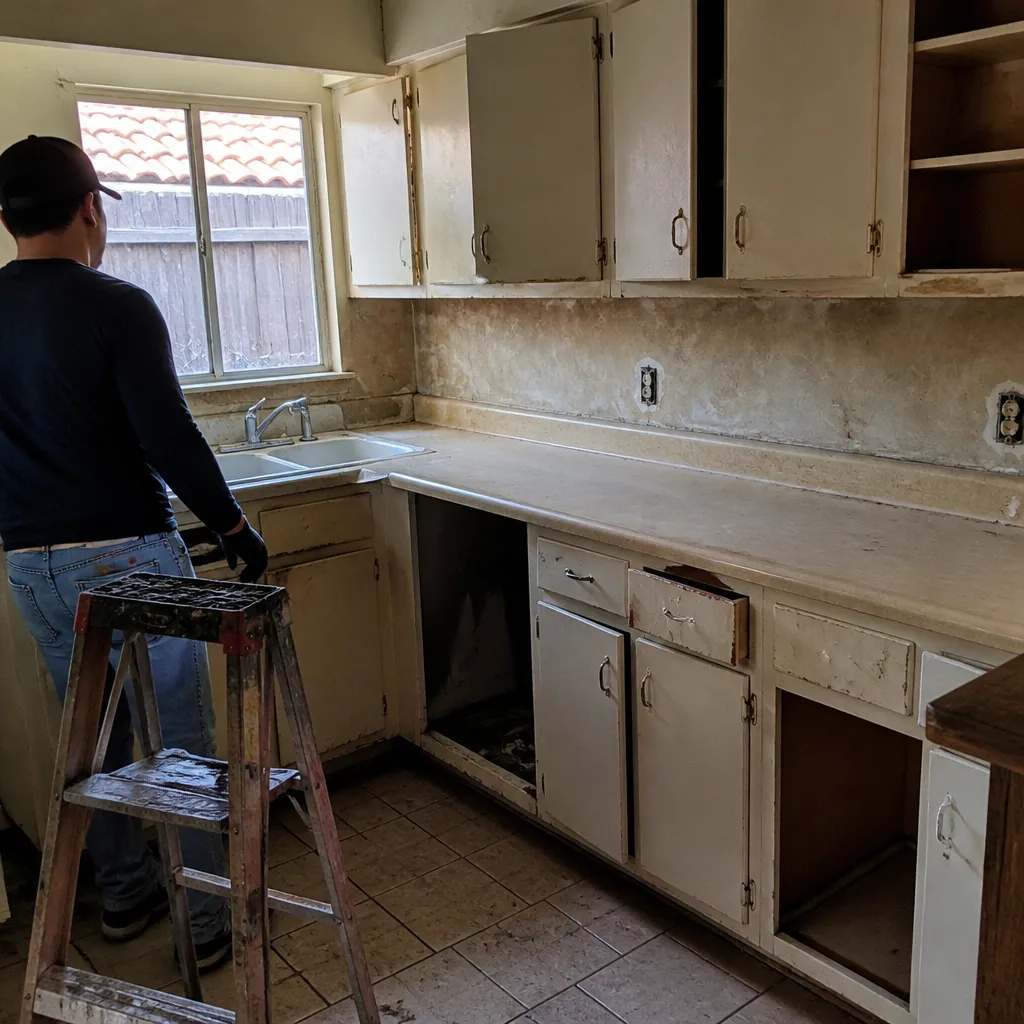 Before
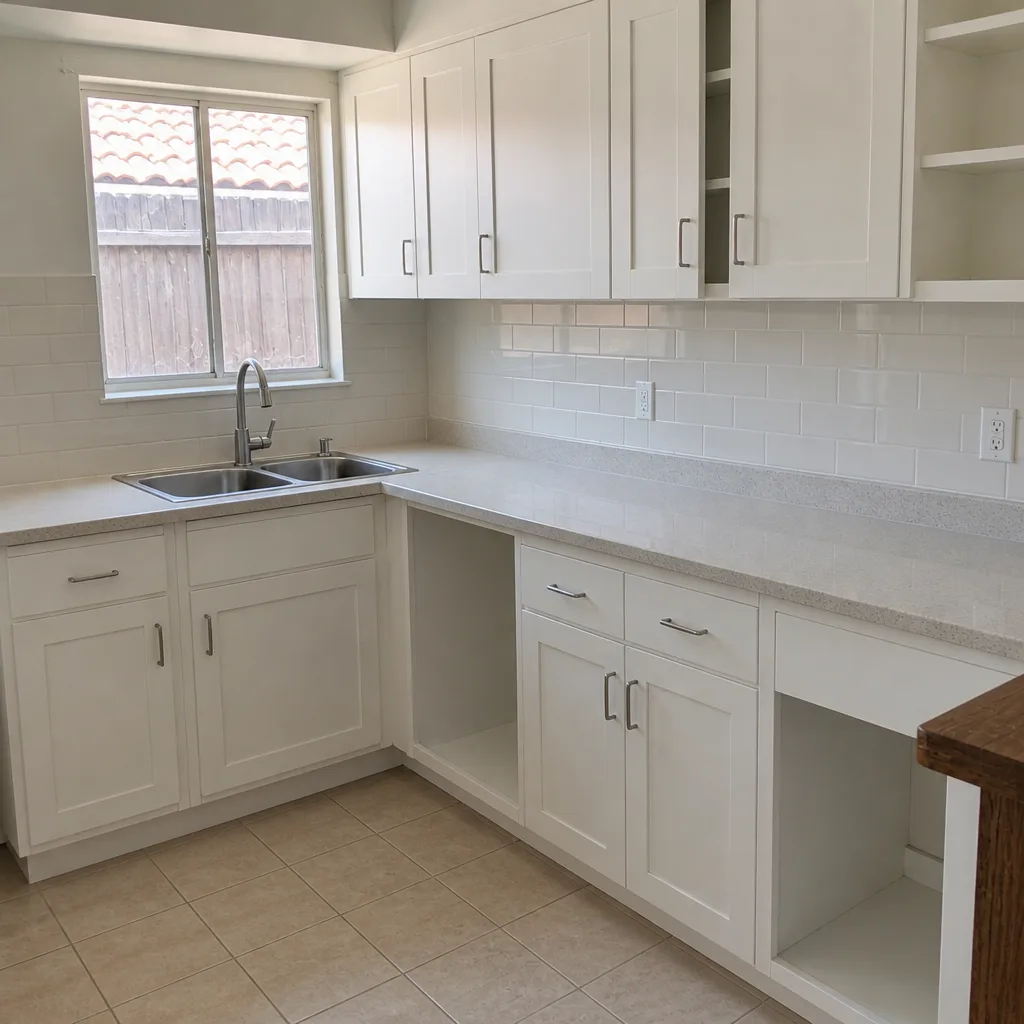 After
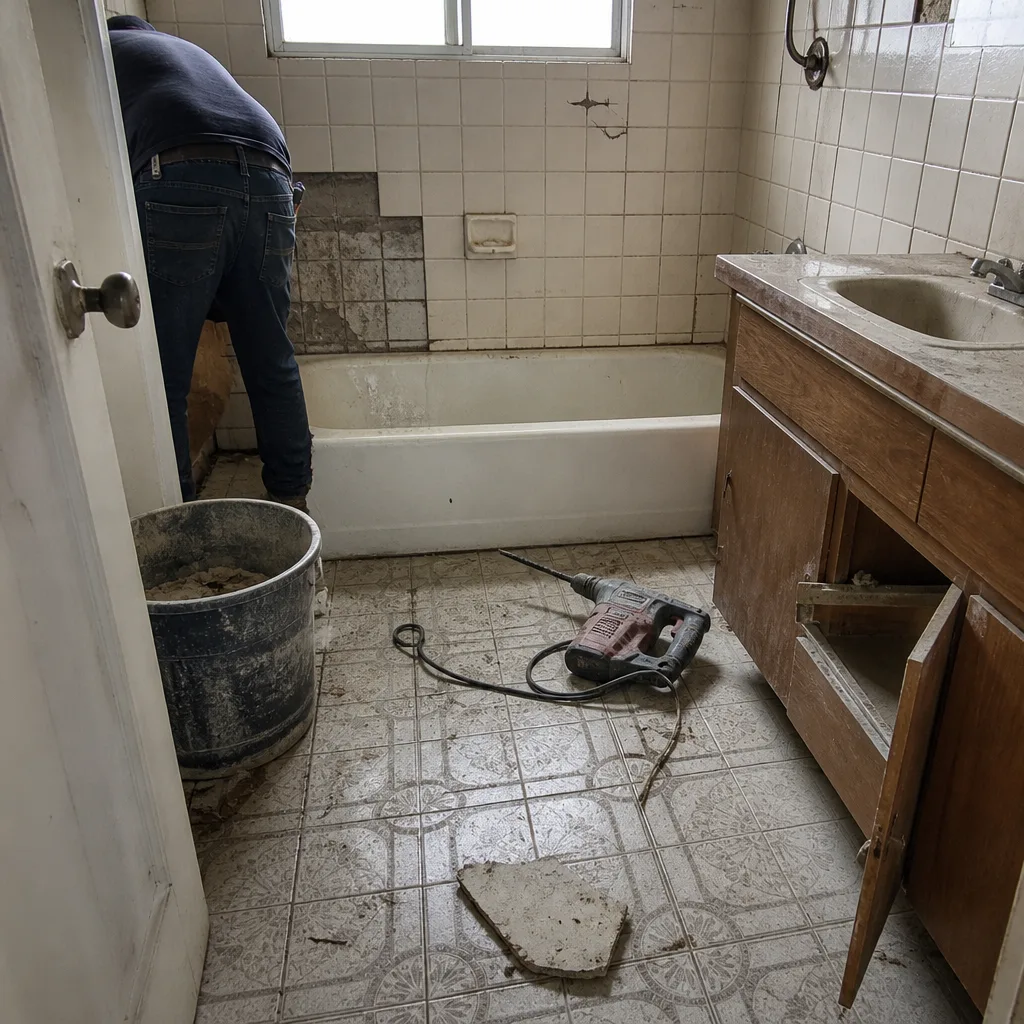 Before
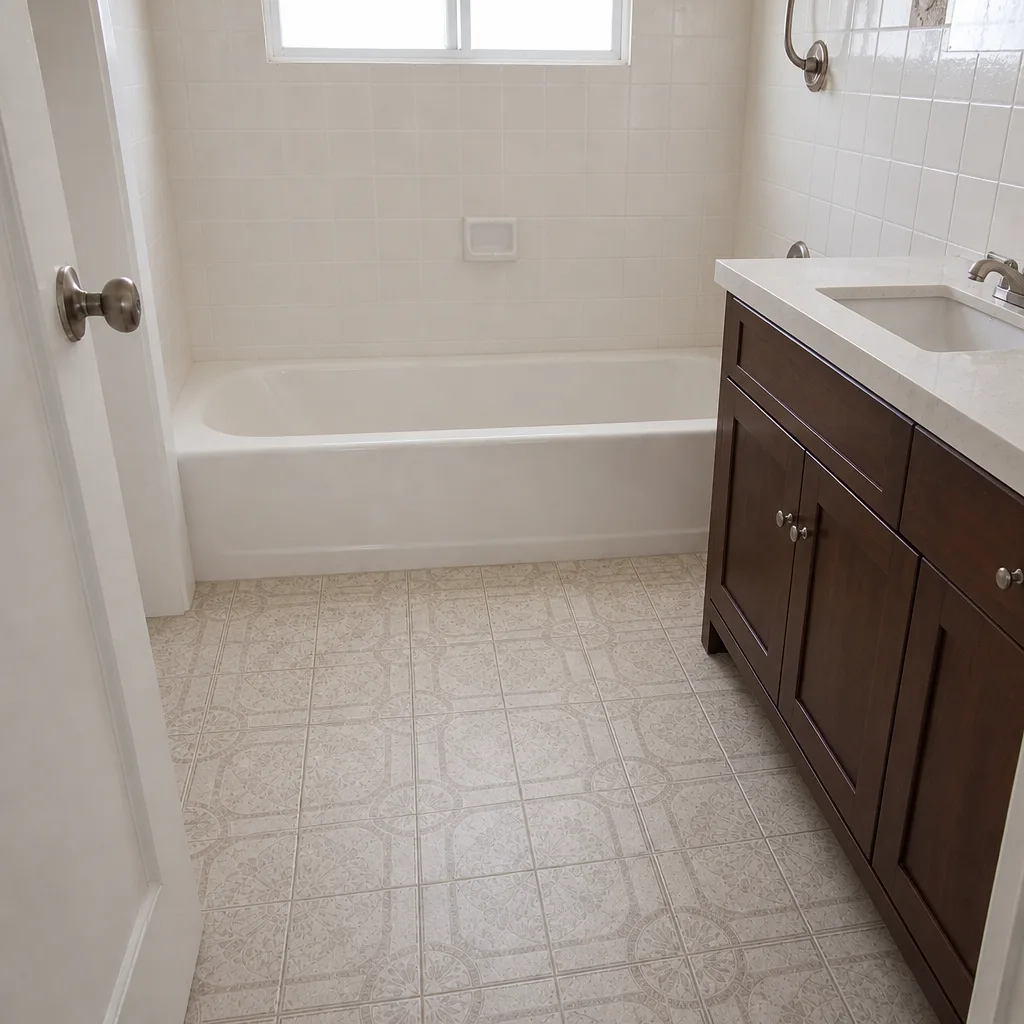 After
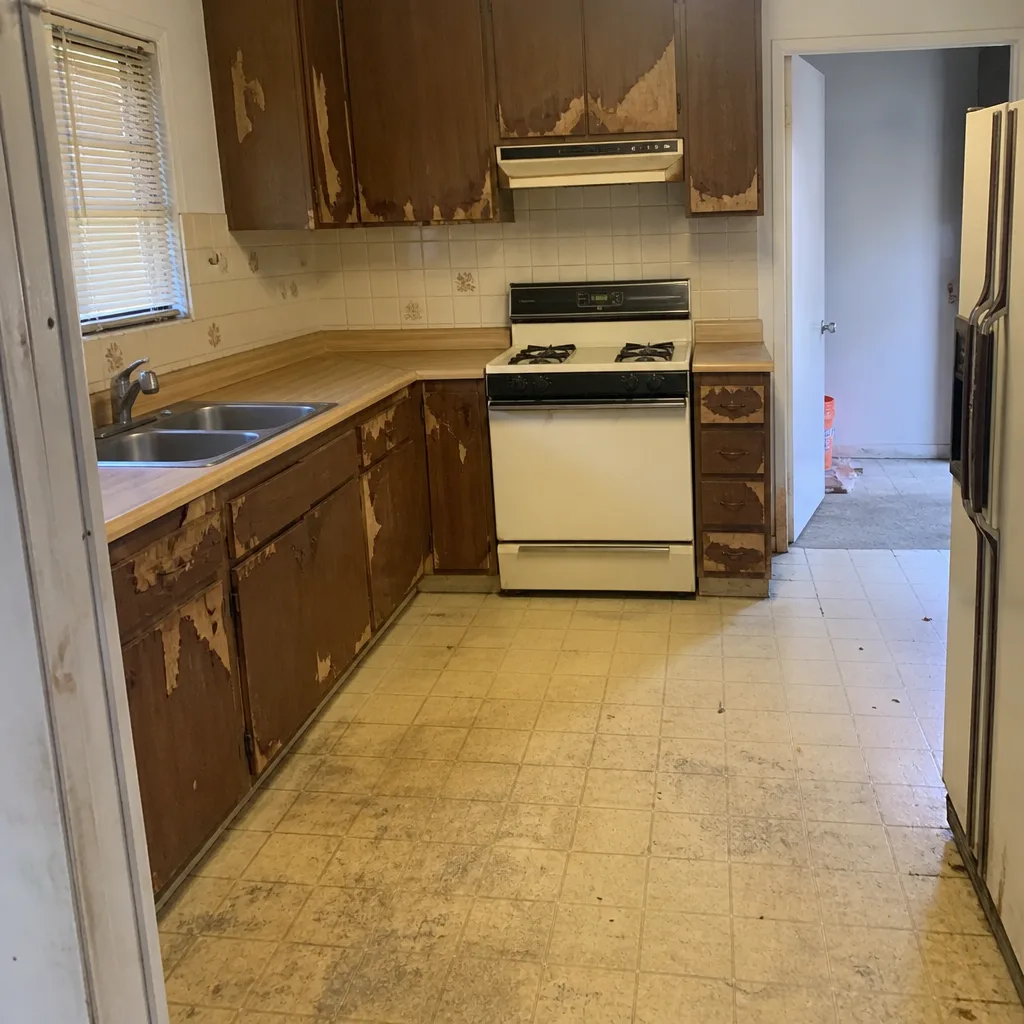 Before
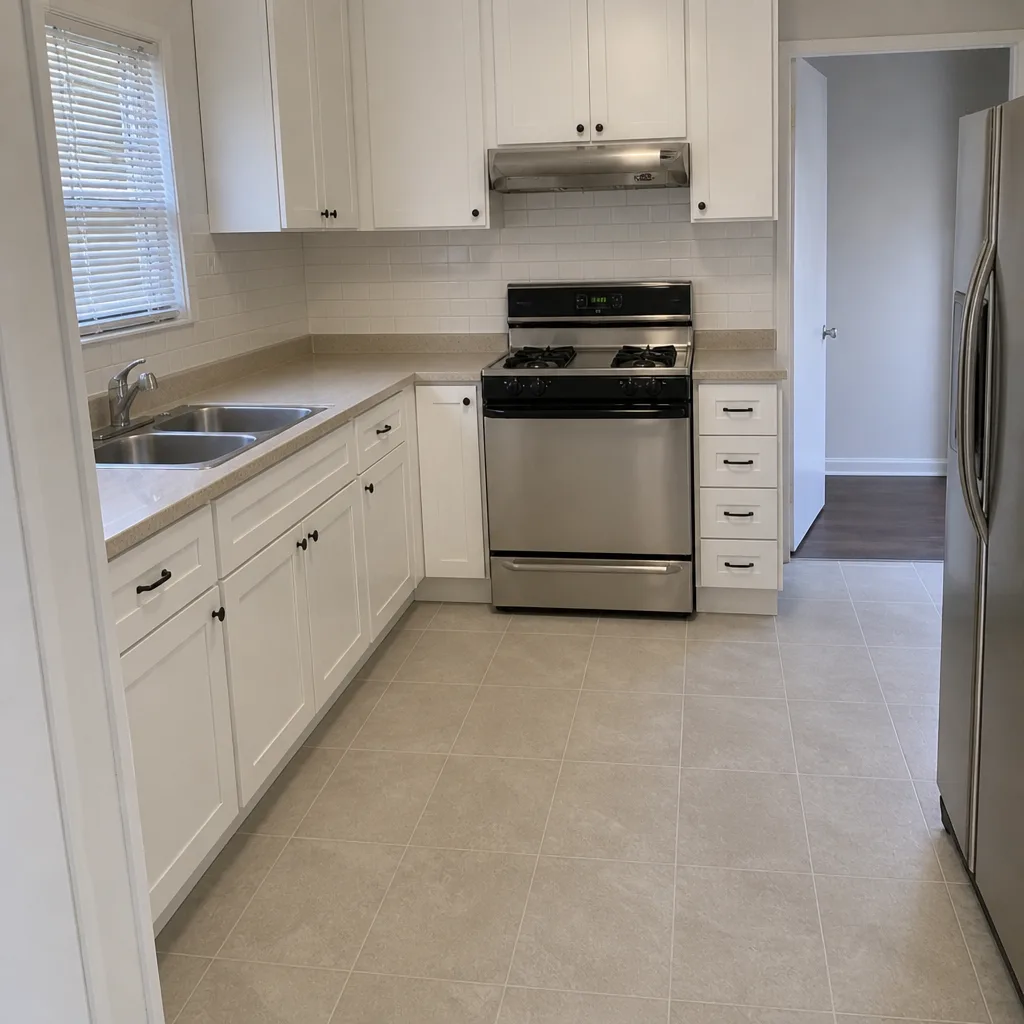 After
Frequently Asked Questions

Normal settling produces hairline paint cracks at drywall seams, drywall nail pops, seasonal door sticking, and caulk shrinking at tub edges – all of which are maintenance. A guarantee problem produces water staining, repeated GFCI trips, standard breakers tripping under normal load, grout cracks that run through a tile field, and doors that stop closing after working fine. If the symptom is water, electrical, or structural, presume it’s inside the guarantee until someone looks at it. Call (844) 320-2908 for an honest read on whether it’s covered.
Photograph it with a size reference and a timestamp the day you see it, note the date on paper, then send written notice to your contractor that day. Don’t paint over it and don’t open the drywall yourself. Water stains can be slow or they can be a fast leak, and the only way to know is for a professional to trace it. In Anaheim, the dry season hides slow leaks longer than you’d expect because the attic dries quickly – don’t assume a stain in July is stale.
Once is fine; repeatedly, especially after a shower, is a defect. A GFCI trips when it detects even a tiny current imbalance, and repeated trips in a new bathroom circuit usually mean moisture has reached the wiring or the GFCI itself was wired incorrectly. This is inside the contractor’s guarantee and should get a written report right away. Call (844) 320-2908 and ask for a diagnostic visit.
A written report with photos should get a response within one business day and a diagnostic visit scheduled within the week. That’s the standard we hold ourselves to: a live person answers the phone at any hour, and a real arrival window is always part of the plan. If a contractor won’t give you a response timeline in writing, that’s worth noting.
Only if there’s documentation to support it. Pre-work photos and written substrate condition notes are the difference between an honest disagreement and an argument that goes nowhere. When the pre-demo file is on record, the question of whether a crack, a stain, or a slow drain existed before the work is answered by the file, not by memory. That’s why we photograph and take substrate notes on every Anaheim project before demo starts.
If you hired a general contractor for the whole project, that contractor is responsible for identifying which trade the failure sits in and getting it fixed – that’s single-point responsibility, and it’s the reason to hire one company rather than five. If you hired each trade separately, you’re carrying the coordination, and a multi-trade problem ends up in your hands. Call (844) 320-2908 if you’re not sure which way your project is set up.
The Bottom Line
Remodel problems look sudden but they’re almost never sudden. They telegraph – a stain, a slow drain, a door that sticks a little more each week, a breaker that trips twice. Your job as a homeowner is to watch for those signals, document what you see, report it in writing, and know the difference between a maintenance item and a guarantee claim. The right contractor makes that easy by putting the price in writing before work starts and the guarantee in writing when the work finishes, and by answering the phone when the symptom shows up. Before your next Anaheim project, get the estimate and the guarantee on paper – our general contracting services in Anaheim include both as standard, and the first walkthrough is free.
Ready to start a project that you’ll still feel good about a year from now? Call Penhallow Remodeling Anaheim at (844) 320-2908 for a free estimate. A live person answers 24/7, we walk the space with you, and you get a written price before any work starts. Every job comes with our 365-Day Done Right Promise, background-checked technicians in uniform, and materials from trade brands you’ll recognize – KraftMaid, Cambria, Kohler, and Moen among them – so the guarantee and the products behind it are equally solid.
Written by the team at Penhallow Remodeling Anaheim.