Last updated November 18, 2026





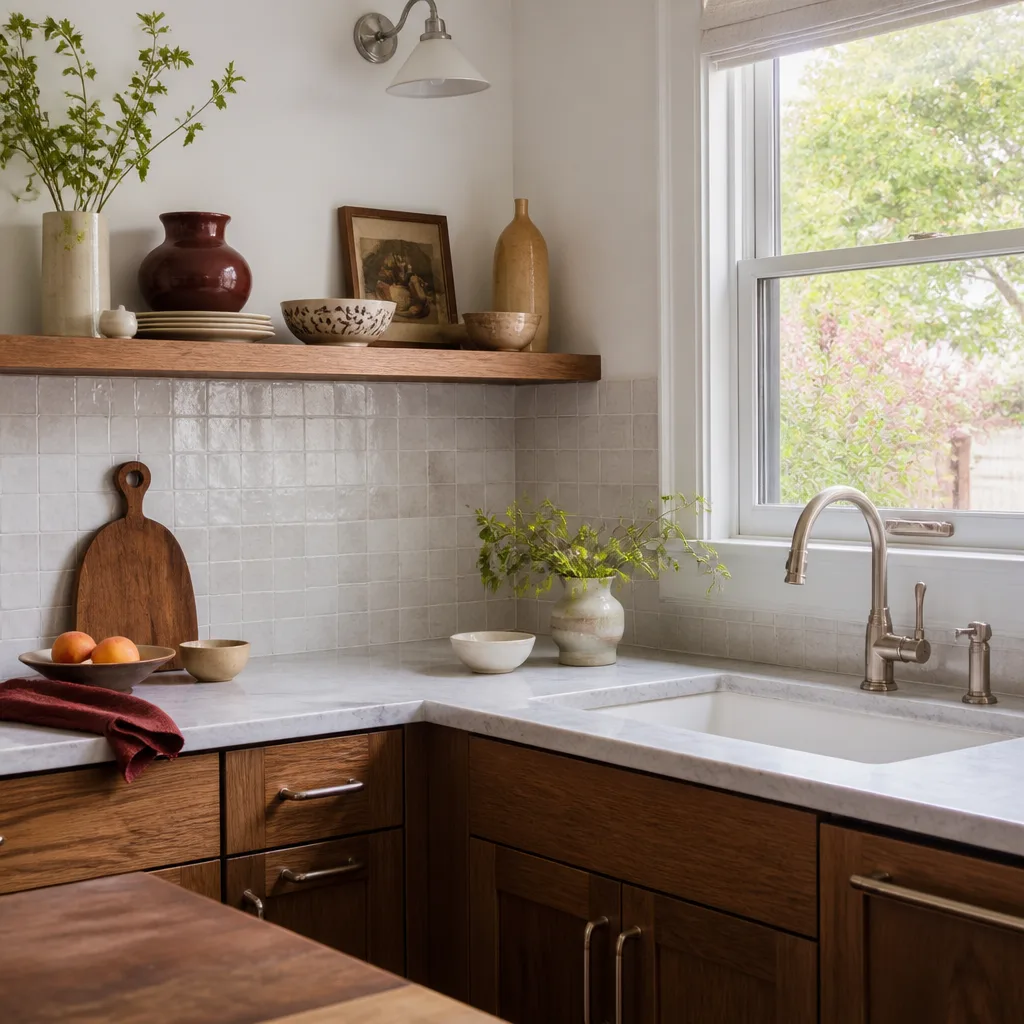
Free written scope consultation - allowances, timeline, and change-order rules on paper before a single trade is scheduled
How to Hire a Construction Contractor in Anaheim: A Step-by-Step Guide
Most homeowners think the risky part of hiring a contractor is picking the wrong company. It isn’t. The risky part is signing a document that doesn’t actually commit anyone to anything. A verbal estimate is a legal placeholder, not a contract. In California, a contractor who gives you a price at the door and a higher number on day three is using a tactic, not making a mistake. The single step Anaheim homeowners skip – demanding a written price and a written guarantee before signing – is the step that separates every bad contractor story from every good one. This guide shows you exactly how to do it, from checking a license on the CSLB in two minutes to reading the fine print that protects your money.
Quick Answer
To hire a construction contractor in Anaheim, verify their California license number on the CSLB website, get a written line-item price before any work starts, confirm a written guarantee that spells out what’s covered and for how long, and structure payments so you’re never more than one completed phase ahead. A contractor who won’t put the price and the guarantee in writing before signing isn’t a contractor you can hold to a number on day three.
Styles & brands we work with
- Kitchen remodeling
- Bathroom remodeling
- Home additions & ADU
- Roofing
- Windows & doors
- Driveway & pavers
- Fence
Table of Contents
- Step 1: Verify the California Contractor License
- Step 2: Read the Written Estimate – Line by Line
- Step 3: Get the Guarantee in Writing, Not in a Handshake
- Step 4: Structure the Payment Schedule
- Step 5: Ask Three Questions That Reveal Whether They Priced Your Job
- Anaheim-Specific Factors That Change the Price
- Permits, Inspections and Why They Aren’t Optional
- Common Mistakes to Avoid
Step 1: Verify the California Contractor License
Every contractor who touches your Anaheim house for a job over $500 in labor and materials must hold an active license with the Contractors State License Board, or CSLB. Verifying that license takes under two minutes and it’s the single cheapest protection you’ll ever buy for a remodeling project.
Here’s the exact process:
- Go to cslb.ca.gov and click “Check a License.”
- Enter the license number the contractor gave you – not their business name.
- Confirm three things: the status reads “Active,” the classification matches the work (B for general building, C-39 for roofing, C-36 for plumbing), and the name and address on the license match who you’re hiring.
- Scroll down to the “Complaints” and “Disciplinary Actions” sections. An active license with three pending complaints is not the same thing as a clean active license.
- Ask for a certificate of insurance naming you as an additional insured, and call the insurer to confirm it’s current. A lapsed general liability policy means your fire damage is your problem.
“Active” status is not a quality rating. It means the contractor paid their renewal fee, posted a bond, and hasn’t been suspended. A contractor can be active and still have a long complaint history. That’s why you read the whole page, not just the status line.
In Anaheim, we see this step skipped constantly in the older neighborhoods – the pre-1960s tracts near downtown where a lot of homes have had three or four additions made by unlicensed crews over the years. A contractor who can’t produce a license number on the first phone call is not a contractor you should let into your crawlspace. If you’re already working with a general contractor in Anaheim and want a second opinion on the paperwork, that’s a sane reason to call.
Step 2: Read the Written Estimate – Line by Line
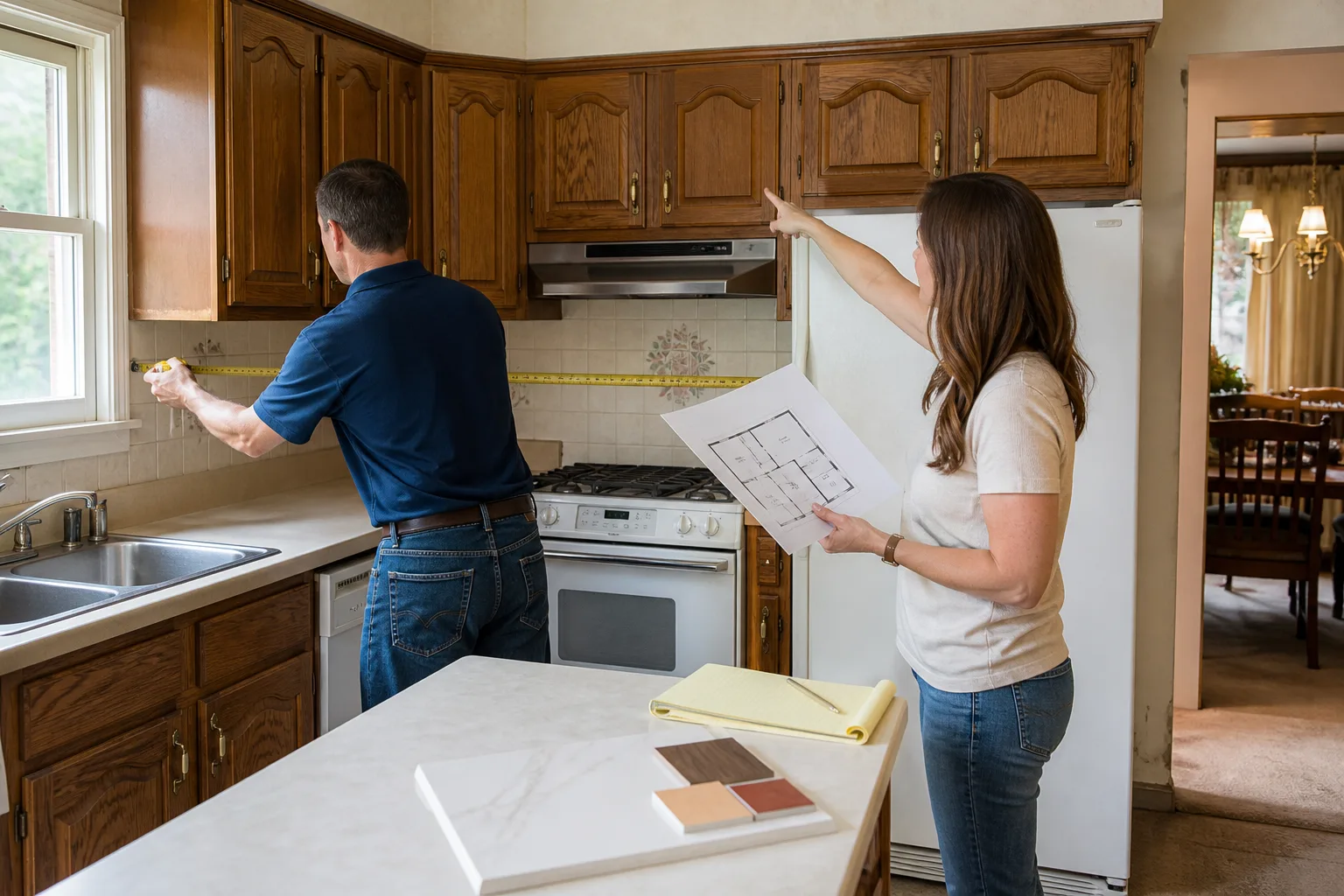
A written estimate is only useful if it’s itemized. A single lump-sum number on a page – “Kitchen remodel: $42,000” – tells you nothing about what’s included, and it gives the contractor total discretion to decide later what was “extra.” The estimate you sign should break the job down by phase and material so the price is auditable.
The exact language to look for in a written estimate:
- Line-item breakdown of demo, framing, rough-in, substrate, finish materials, labor, permits and cleanup – each with its own dollar figure.
- Named materials with model or line: “KraftMaid Vantage cabinetry, Cambria quartz countertop” or “Kohler Forte faucet” – not “mid-grade cabinets and laminate.”
- Explicit allowance figures for anything you haven’t picked yet (tile, appliances, fixtures), so you know what happens when you blow through the allowance.
- A stated change-order process: any addition is priced and signed in writing before the work happens. No verbal “we’ll just add it on.”
- A payment schedule tied to completed phases, not calendar dates.
- Permit responsibility stated as the contractor’s, not “owner to pull permits.”
The exact language to reject:
- “Price subject to change upon inspection” with no dollar cap.
- “Materials TBD” or “builder’s grade” with no upgrade path.
- “Additional work billed at time and materials” with no hourly rate or markup stated.
- A required deposit over 10% of the contract price. California caps a down payment on a home improvement contract at $1,000 or 10% of the contract price, whichever is less – anything more is a red flag and frequently a violation.
Penhallow Remodeling writes a price before any work starts, always – not a range, not a ballpark: a written number we can be held to. That’s the standard the Penhallow Remodeling Anaheim home page describes under the Kingswell Guarantee, which has required a written price before work since 2004.
Step 3: Get the Guarantee in Writing, Not in a Handshake
“We stand behind our work” is a sentiment. It has no legal meaning attached to a piece of paper. A written guarantee, by contrast, spells out four specific things: what’s covered, how long the coverage lasts, what the contractor will do if something fails, and what the homeowner’s obligations are to keep the coverage valid.
What a 365-day guarantee should cover in writing:
- All labor, including installation defects, improper fastening, water intrusion caused by installation error, and cracks traced to substrate (the moisture-resistant layer behind your tile) that was installed incorrectly.
- The exact remedy: repair, replace, or refund – chosen by the contractor, at no charge to the homeowner.
- The response window: how many days from your call to the return visit.
- The owner’s obligations: what upkeep and use patterns would void the coverage.
- A warranty term stated in months or years, with a start date (should be project completion, not contract signing).
Penhallow operates the 365-Day Done Right Promise: if the work fails inside that window, we return and fix it at no charge, and it’s written into every project. If a repair fails, the return visit is free – no service call fee, no re-inspection charge. If your contractor can’t put a comparable statement in writing and hand it to you before signing, that’s not an oversight. That’s your answer.
Also ask whether the product warranty is separate from the labor warranty. We install Cambria quartz, which carries its own lifetime warranty alongside ours, so a homeowner is protected on two layers. Any manufacturer warranty you’re told about should be handed to you in the original documentation, not summarized.
Step 4: Structure the Payment Schedule
The payment schedule is the single most important negotiable in a construction contract, and it’s the one homeowners almost never negotiate. The rule is simple: you should never be more than one completed phase ahead in money paid. If your contractor has $18,000 of your money and hasn’t finished the first phase, they’re financing their business with your cash and you’ve lost leverage.
A reasonable schedule for a mid-size Anaheim remodel looks like this:
- Deposit at signing: capped at $1,000 or 10% of the contract price, whichever is less.
- Payment upon completion of demo and rough-in: covers the labor and materials to that point.
- Payment upon completion of drywall and substrate: next phase, next check.
- Payment upon delivery of finish materials: cabinets, countertops, fixtures, with delivery confirmed visually.
- Final payment at punch list sign-off: held until every item on the punch list is complete and you’ve walked the job.
Never pay the final 10% until you’ve inspected the work in person and had the city inspector sign off. The city will issue a final inspection sign-off, and it’s your right to hold the final check until you see it. In Anaheim, permits go through the city’s Building Division and inspection results post to the online portal, so there’s no reason a contractor can’t show you the status.
Step 5: Ask Three Questions That Reveal Whether They Priced Your Job
Most contractors walk into a bid with a ballpark for a “typical” remodel of that type, then revise the number once they see the specific site. The difference between a real bid and a ballpark is whether the contractor priced your job. Three questions will tell you which one you’re getting.
- “Walk me through how you arrived at the substrate and framing numbers.” A contractor who actually priced your job will reference your specific existing conditions – “your subfloor is 3/4-inch plywood over a 1/2-inch underlayment, which is fine for tile but needs cement board on top” – or will say plainly that they need to open a wall before committing. A contractor using a ballpark will give you a per-square-foot number and change the subject.
- “What’s not included in this price, and what would make it go up?” The contractor should answer with a specific list – permit fees if structural changes are discovered, appliance upgrades, unexpected termite damage – and should tell you up front what each item typically costs. If the answer is vague (“whatever comes up”), you’re looking at change orders on day three.
- “Which Anaheim inspections will this project need, and who’s pulling the permits?” A contractor familiar with your city will name the specific sub-trades that need separate permits (electrical panel changes, gas line work, water heater replacement) and confirm they’re pulling them. If they say “you can pull the permits yourself,” that’s a contractor who has priced the job without the permit timeline or fees folded in.
Small sample-size caveat: we’ve been in kitchens in every Anaheim ZIP code and the honest contractors all answer these three questions with specifics. The ones who give a ballpark sometimes give a great opening number, and the number always grows.
Anaheim-Specific Factors That Change the Price
Anaheim is not a uniform market. What you’re renovating and where it sits changes the price in ways a contractor from out of town won’t catch.
- Foundation and soil. Anaheim sits on a mix of alluvial deposits and older slab-on-grade housing stock. Pre-1970s homes in the Colony and downtown districts often have slab foundations with post-tension cabling – a permit-required engineering report before any wall is moved. Add $500 to $1,500 for the report alone, more if the cable needs shielding.
- Clay soil and drainage. The clay-heavy soil in the flatlands around the Santa Ana River corridor swells and shrinks with the seasonal rain. Exterior flatwork, driveways and patios installed without proper base prep crack within two seasons – which is why we specify Cambridge Pavers over a compacted base with Quikrete or Sakrete bedding, not sand-set pavers on bare soil.
- HOA rules in Anaheim Hills and the Platinum Triangle. If you’re in an HOA, exterior changes to siding, paint color, windows, and roofline need architectural review board approval before the permit application is submitted. That typically adds 4 to 8 weeks to the schedule and 2 to 5% to the cost in design revisions. A contractor who doesn’t ask whether your home is HOA-governed is a contractor who hasn’t bid your job.
- Coastal influence and dry heat. Twelve miles from the coast means mild summers but dry air most of the year and occasional Santa Ana wind days. Wood flooring acclimates differently here than in Long Beach; cabinets need to acclimate to the room they’ll live in, not to the garage. Cabinets installed too fast from a cold truck will show door misalignment within 60 days – that’s a substrate-and-acclimation issue, not a warranty repair.
- Aging plumbing in the older tracts. Any Anaheim home built before 1980 is likely plumbed with galvanized steel or early copper. A bathroom or kitchen remodel that opens the wall will almost always find a section that needs replacement, and a contractor who priced the job did a visual inspection before signing. If they didn’t, you’ll get a change order.
If you’re comparing contractors for a bathroom specifically, our guide to bathroom remodeling in Anaheim covers the wet-area waterproofing details that most bids gloss over. For kitchens, the kitchen remodeling in Anaheim page walks through how cabinet line and countertop material drive the price.
Permits, Inspections and Why They Aren’t Optional
A permit is not paperwork. It’s the legal mechanism that puts a city inspector between your contractor’s work and your home’s fire, structural and life-safety systems. Skipping it might save two weeks and a few hundred dollars, and it will cost you on resale, on your homeowner’s insurance claim, and possibly on your life if an unpermitted electrical panel fails.
In Anaheim, the following work almost always requires a permit: any structural change (wall removal, new beam, addition), electrical panel replacement or new circuits, gas line work, water heater replacement, bathroom or kitchen plumbing relocation, roofing over a certain square footage, and any deck or patio over 30 inches above grade.
When you hire, confirm three things about permits in writing:
- The contractor pulls the permit in their own name (this is required by law).
- All inspection results are shared with you as they come through the city portal.
- Final inspection sign-off is a condition of the final payment.
If the contractor proposes doing the work “without a permit, and it’ll be fine,” walk away. That’s a decision that transfers all the liability from them to you.
Common Mistakes to Avoid
- Accepting a verbal estimate because the contractor is “old-school.” Old-school contractors still sign contracts. If they can’t put a price on paper, the price they gave you at the door is not the price you’ll pay.
- Paying more than 10% down. California caps the down payment at $1,000 or 10% of the contract price. Contractors who ask for 30% up front are using your money to buy materials for the next job.
- Skipping the CSLB complaint check. An active license with three pending complaints is common enough that we’ve seen homeowners sign anyway. The complaints page is free. Read it.
- Not asking about permits in an HOA neighborhood. In Anaheim Hills and the Platinum Triangle, unpermitted exterior changes get flagged by the HOA before the city finds out – and both outcomes involve redoing the work.
- Holding back too little at the end. If your final payment is 2% of the job, you have no leverage for the punch list. Target 10% held until final inspection and walkthrough.
- Trusting the product warranty without the labor warranty. A lifetime Cambria warranty covers the countertop, not the install. Ask for both, in writing.
- Choosing the cheapest bid. A bid 30% under the others usually means something was left out – typically the substrate, the permit, or the electrical panel upgrade. Ask each contractor to list what their price excludes, then compare those lists.
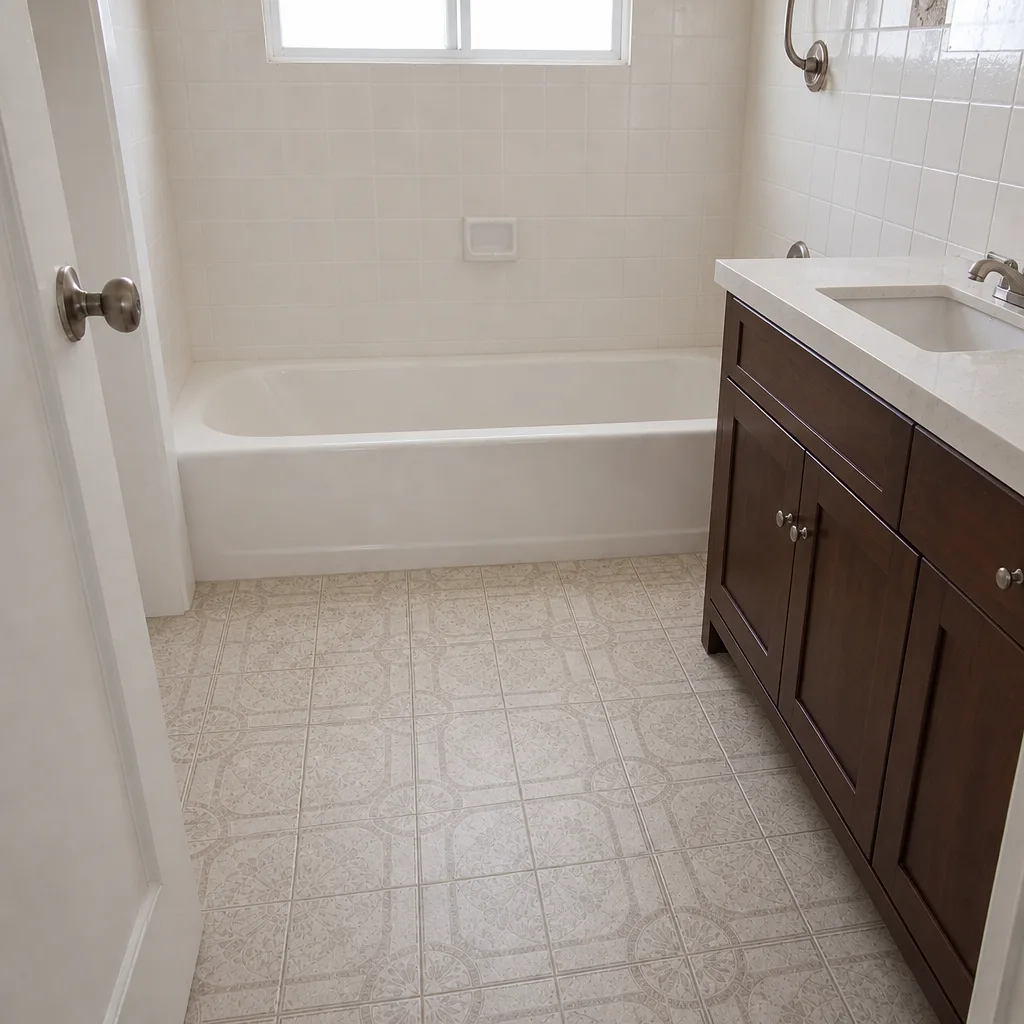
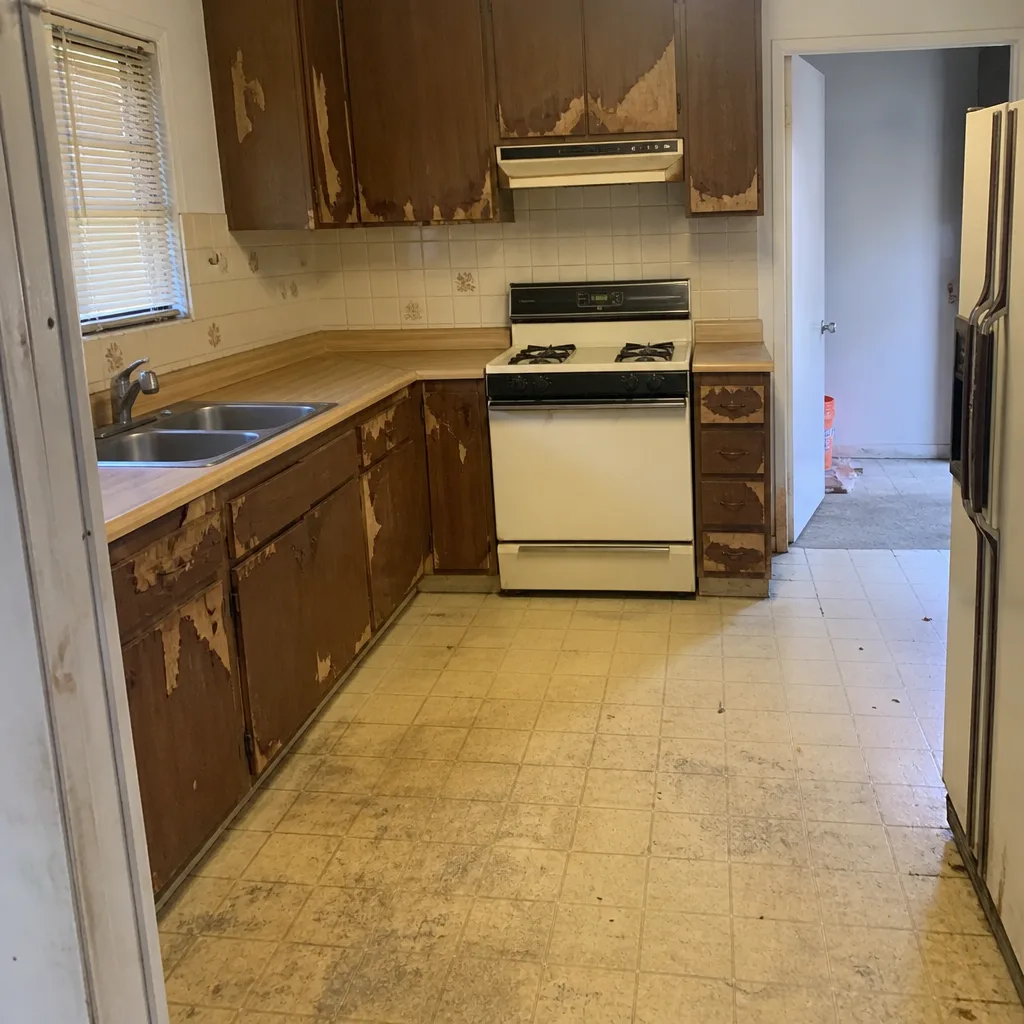
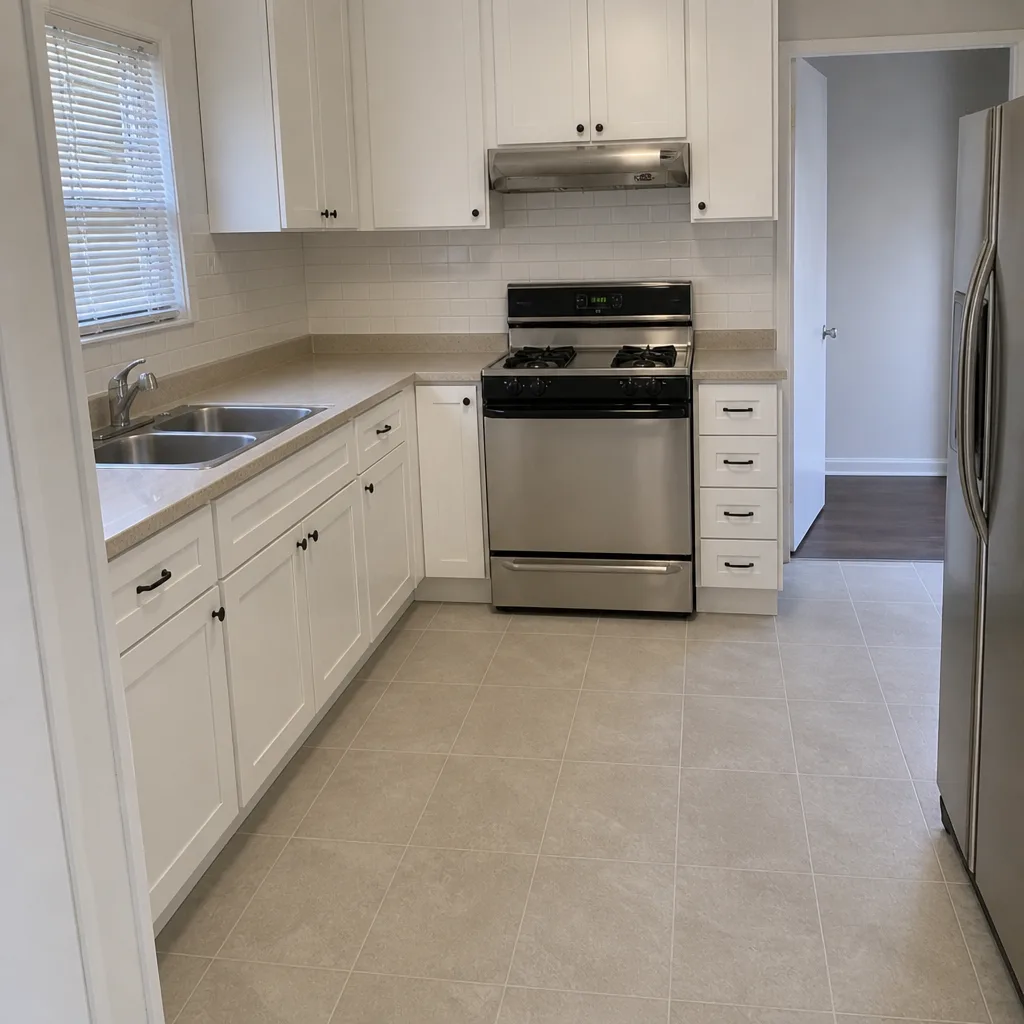
See the difference
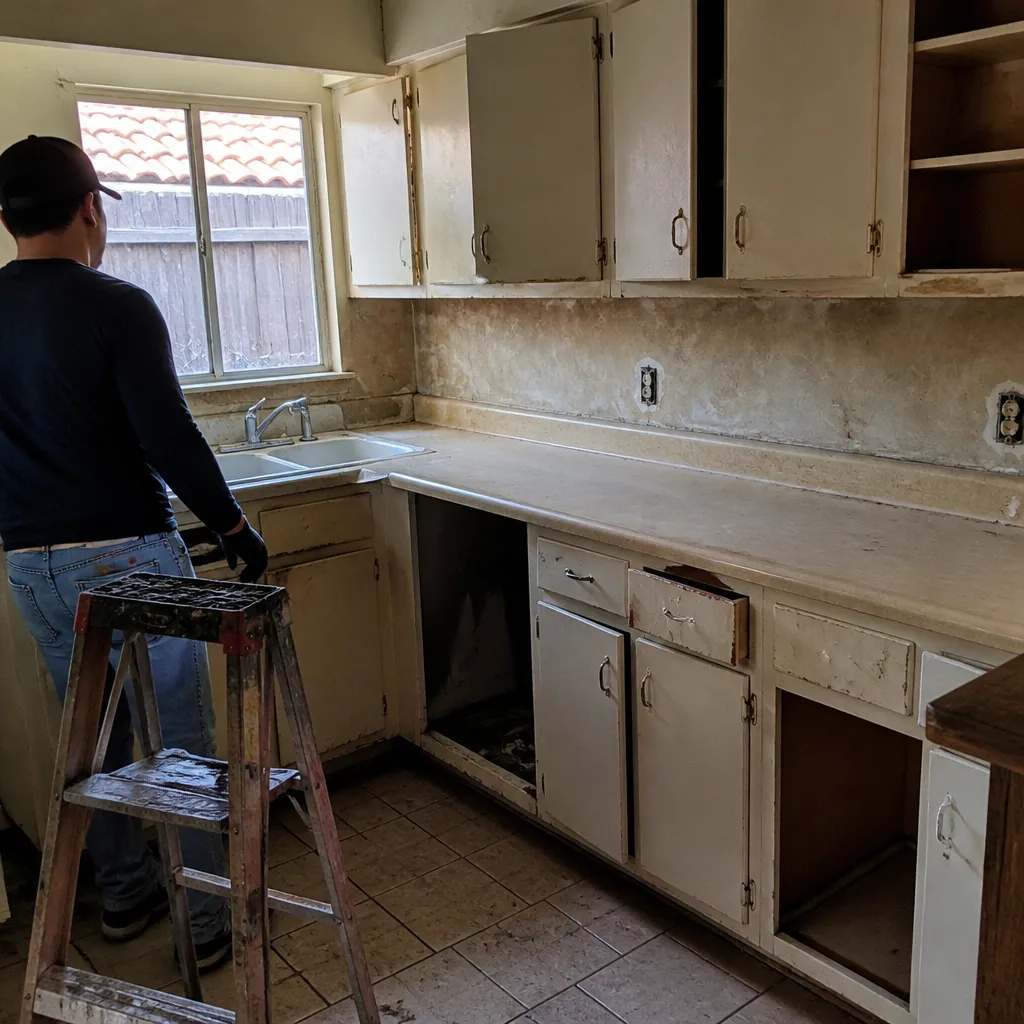 Before
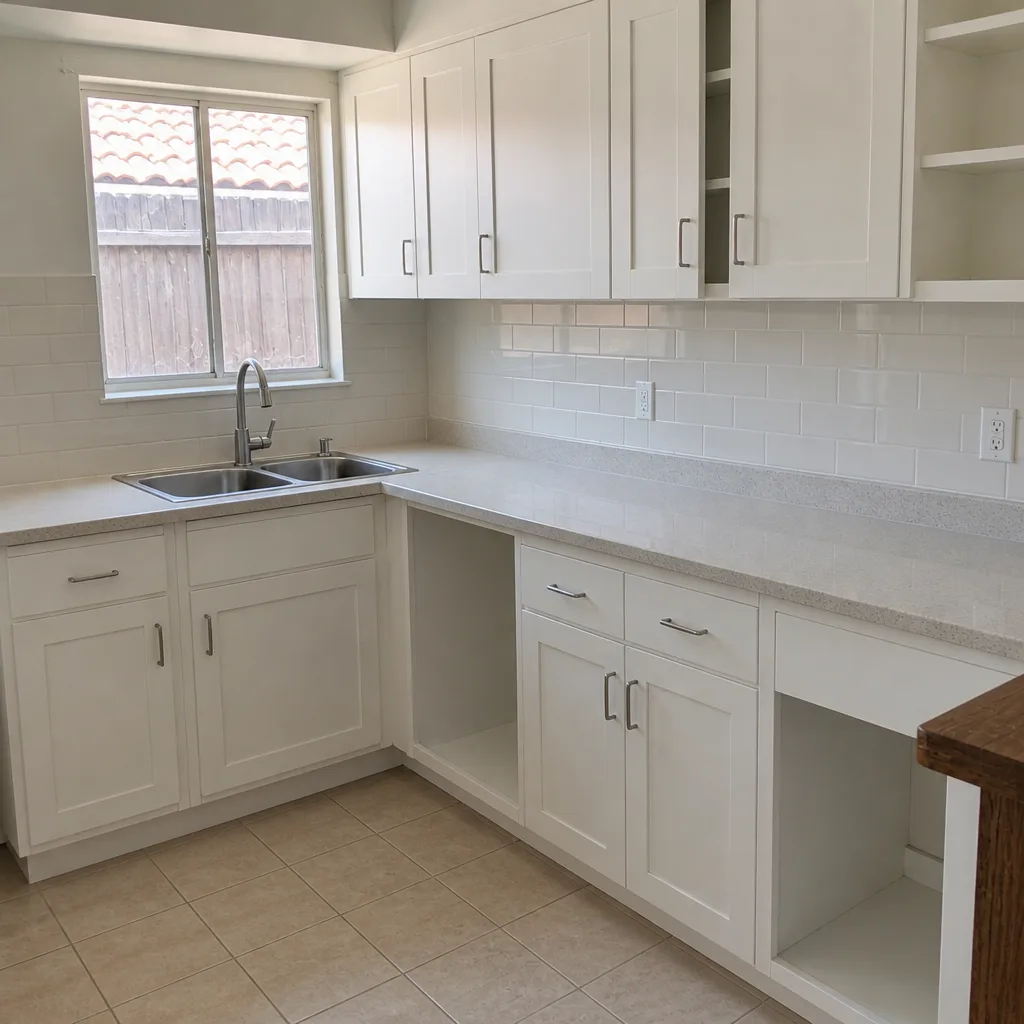 After
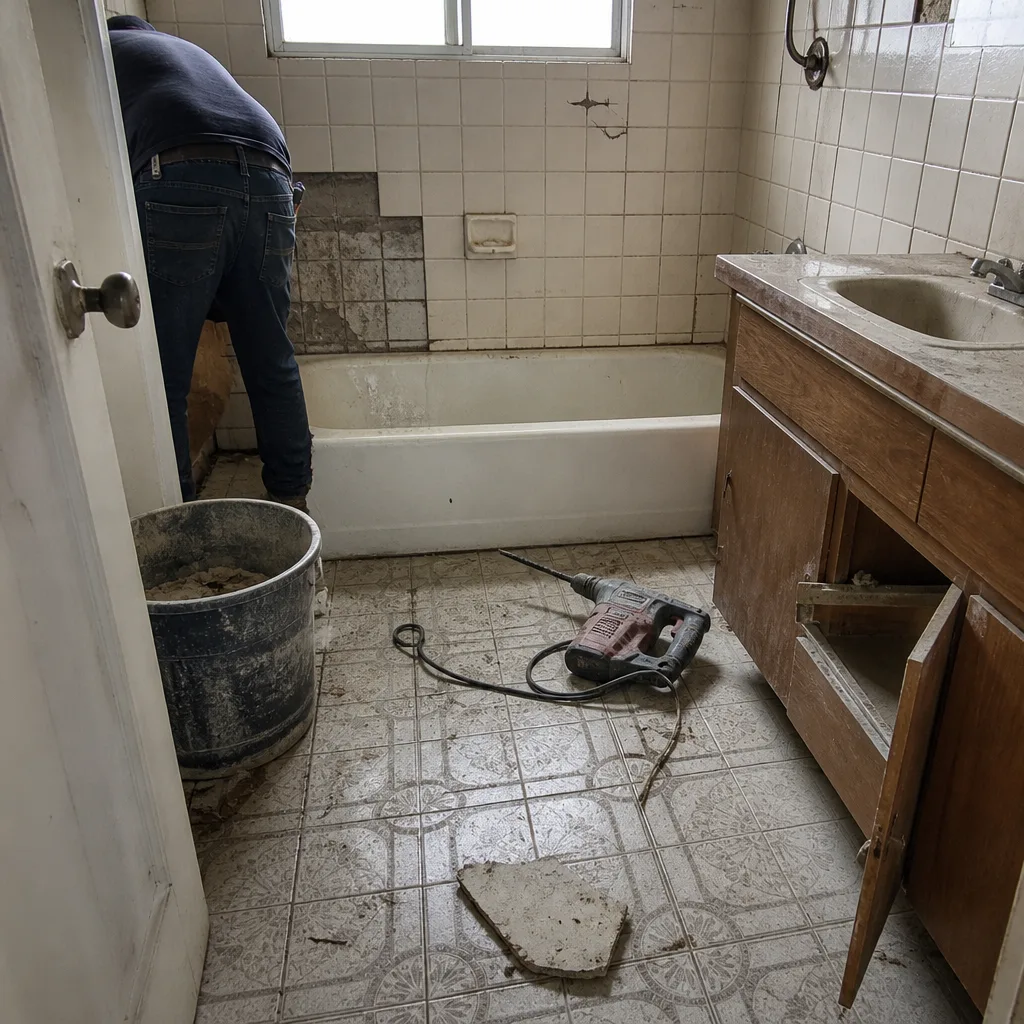 Before
 After
 Before
 After
When to Call a Professional

Some jobs genuinely shouldn’t be DIY. If your project involves removing a wall under load, replacing an electrical panel, running a new gas line, installing a new shower pan with a proper waterproofing membrane, or re-roofing above a 6:12 pitch, bring in a licensed professional. The cost of a permit and a trained crew is a fraction of the cost of a failed inspection, an insurance denial, or a shower that leaks into the ceiling below within six months.
Penhallow Remodeling Anaheim offers free estimates in Anaheim – written, line-item, and backed by the 365-Day Done Right Promise. Call (844) 320-2908 to schedule yours. A real person answers the phone 24/7, and you’ll get a written price before a single cabinet is pulled.
Frequently Asked Questions
Kitchen remodels in Anaheim typically run $18,000 to $55,000 depending on layout, cabinet line and countertop material. A galley kitchen with KraftMaid Vantage cabinets and Silestone countertops usually lands in the low 20s; a full gut with an island, Cambria quartz and relocated plumbing will run closer to $50,000. Call (844) 320-2908 for a written, line-item estimate – free.
Go to cslb.ca.gov, click “Check a License,” and enter the license number. Confirm the status is “Active,” the classification matches the work, and the name and address match who you’re hiring. Then scroll to the complaints and disciplinary sections – an active license with three pending complaints is not the same as a clean license. Call (844) 320-2908 if you want a second opinion on the paperwork.
No. California requires home improvement contracts over $500 to be in writing and signed by both parties. A verbal estimate is not enforceable – if the number grows on day three, you have no legal recourse. Get the price in writing before signing anything, and call (844) 320-2908 for an exact written quote.
Yes if you’re moving plumbing, adding or relocating electrical circuits, changing the gas line, or removing any wall. Cosmetic work (paint, cabinet fronts, refacing) generally doesn’t require a permit, but any structural or systems change does. The contractor should pull the permit in their own name and share inspection results with you. Call (844) 320-2908 if you’d like help figuring out what your specific project needs.
A full bathroom remodel in Anaheim takes four to seven weeks once permits are approved, depending on whether you’re moving plumbing. Permit review itself adds one to three weeks at the city. Add four to eight weeks if your home is in an HOA that requires architectural review before the permit is submitted. Call (844) 320-2908 for a written timeline alongside your written price.
A real guarantee spells out four things in writing: what’s covered, how long the coverage lasts, what the contractor does if something fails, and what the homeowner must do to keep coverage valid. A vague “we stand behind our work” has no legal meaning. The Penhallow 365-Day Done Right Promise is written into every project, and the return visit if a repair fails costs you nothing. Call (844) 320-2908 to see a copy before you sign.
The Bottom Line
Hiring a contractor in Anaheim comes down to four documents: a CSLB-verified active license, a written line-item price, a written guarantee naming what’s covered and for how long, and a payment schedule that keeps you no more than one phase ahead in money paid. Get all four before signing anything, and ask the three interview questions that reveal whether the contractor actually priced your job or is using a ballpark they plan to revise. The rest – brand names, timelines, walkthroughs – follows from those four documents. Any contractor who can’t produce them isn’t a contractor you can hold to a number on day three, and in Anaheim, that’s the number that matters.
Ready to see what a written price actually looks like? Call Penhallow Remodeling Anaheim at (844) 320-2908 for a free estimate. We answer the phone 24/7, every technician is background-checked and arrives in uniform, and the price we write down on day one is the price on the invoice.
Written by the team at Penhallow Remodeling Anaheim.